

As we arrive at the Calipari home,
we are warmly greeted by Ellen, and then quickly puppy-tackled by the newest member of their family, Lola, who is an adorable 3-month-old ball of fur and energy. Not to be outdone, Igor the orange tabby bravely saunters over to us to feel out the new visitors, which is a bit atypical for a feline. While Ellen is making us feel fast at home, Lola and Igor show continued affection and curiosity to us and to one another, and earn a few laughs. A moment later, John enters the room and greets us with a smile and friendly handshake. It all feels reminiscent to stopping by your neighbor’s house for a cup of coffee, but it’s not lost on me for a moment that we are in the presence of a Basketball Hall of Famer named Naismith College Coach of the Year three times with a National Championship under his belt. Yet, somehow, these are surprisingly normal people.
With their back-and-forth banter and witty jabs, it’s not surprising that John and Ellen Calipari are celebrating 40 years of marriage. “We’re not the perfect couple,” John shares with a pause, and bit of gravity in his voice. “And it’s mainly because of her,” he concludes, garnering a big laugh and playful pat from Ellen. When asked about their strong partnership across multiple moves and different organizations, he expresses that the whole thing works because she bought into the profession and all that comes along with it. While John runs things on the court, Ellen manages things in the house. They each play to their strengths and function in roles that make their family a success — John admitting that he hasn’t written a check to pay a bill in nearly 40 years. The Caliparis have seen their share of ups and downs through coaching for different programs, and with the hopes of thousands of fans resting on their shoulders each season, the stakes can be rather high. “I support, protect, and defend,” Ellen offers with conviction.
“I don’t bring basketball home,” he shares. “I never have.” “We don’t talk basketball,” she agrees. Other than some pretty impressive memorabilia in a small office, the home doesn’t give any hints to Coach Cal’s day job — only evidence of family life. And this house is purposeful. The pair mention looking at others when first moving to Northwest Arkansas, and while any would have worked fine for the two of them and some pets, they needed something that could accommodate the players for their weekly team meals. Ellen even notes that the furniture needed to be sturdy enough to suit larger-than-average individuals.
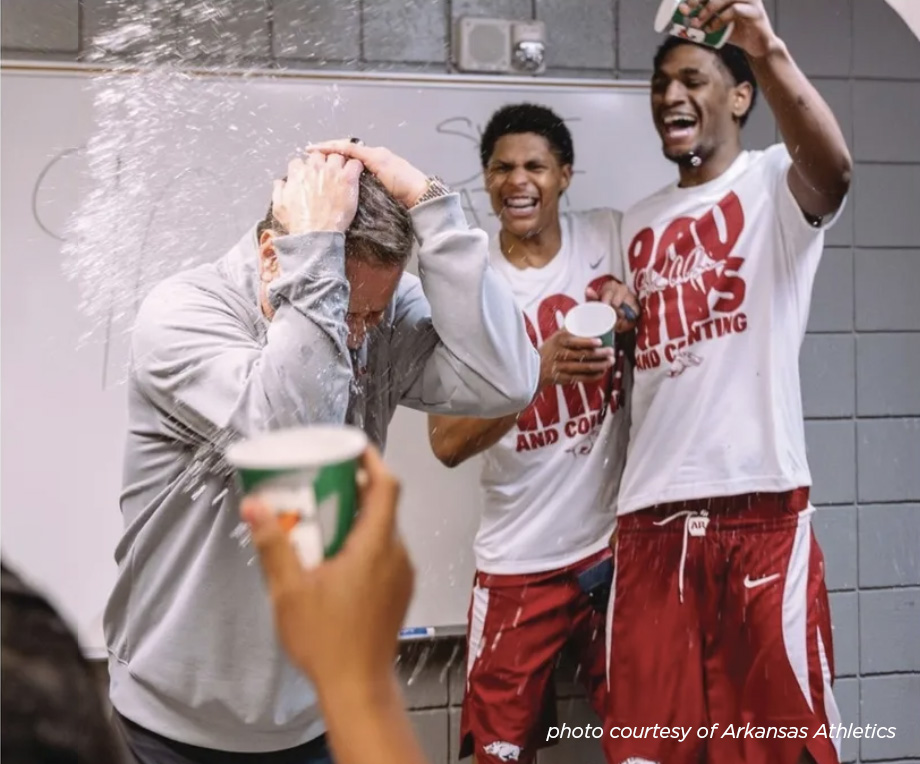
“We want them to be comfortable here,” she says of the young men they welcome into their home and family each year. “Knowing that you’re there for them no matter what is important to us. When you’re around them, you realize how young they are. People see them on the court in their uniforms, and they’re so big, but you forget they’re kids. We want them to know we have their back.” As the season goes on and the highs and lows begin to take effect on the players, the Caliparis’ decades of experience guiding young athletes through this challenging time really shows. “We’re dealing with someone’s child,” John adds. “Yes, we have to have thick skin in what we do, but you have to take the bullets for them. If we’re tired, we know they’re exhausted. If we’re feeling it, then they’re really feeling it. It’s our job collectively to make sure we’re focused on them.”
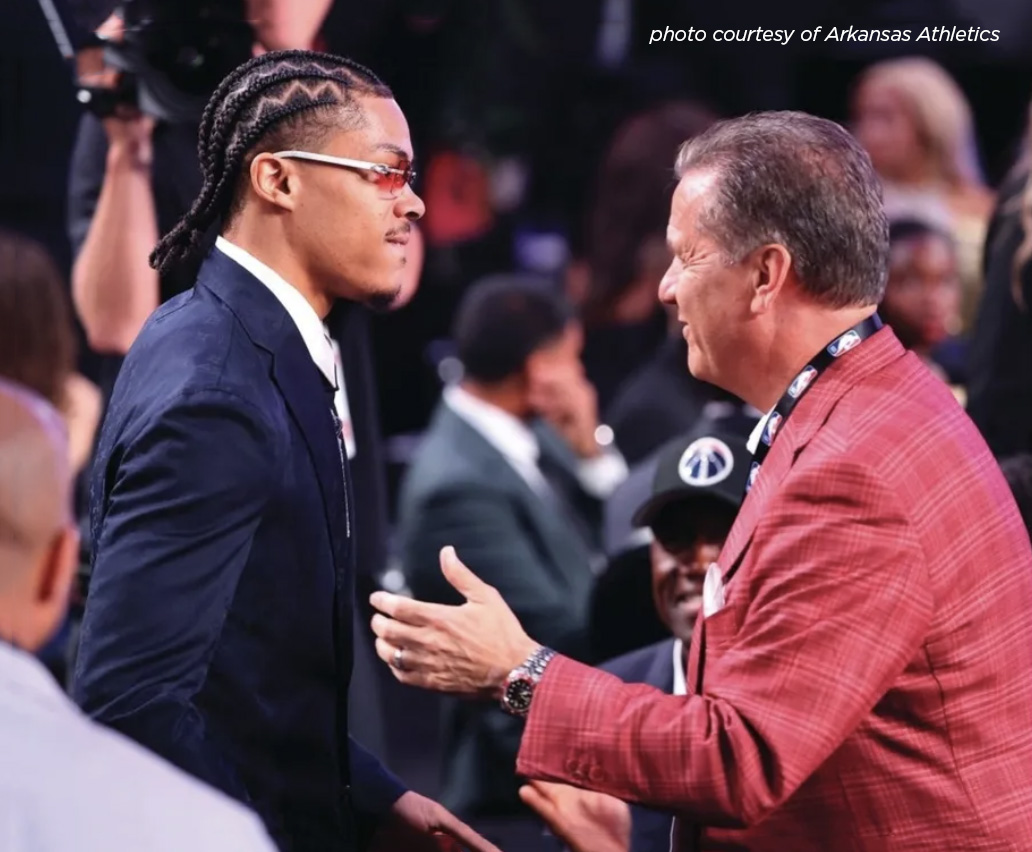
And that focus is on the individual rather than simply the “player,” with an emphasis on building up young men and leading by example. “The greatest sermon is the one with no words,” Coach posits. “Sharing how we do what we do. How we treat each other. What we do over Christmas and Thanksgiving. How we try to treat people when we travel, at the hotel, when we’re eating. Showing that this is how you do it.” These are not just words. The intention is apparent throughout our conversation that, while of course the Caliparis want the team to win games, they truly want the players themselves to become young men who are successful at life, too. They are well aware that not everyone is going to go pro in basketball, though many of his players have. And for those who do, the Caliparis are most proud of the impact they’re making off the court. “The NBA Community Assist Award is a big one for the players,” John explains. “They give the MVP and the All Stars and all that, but that Community Assist Award means something. And it’s not just money — if it was, they could all do that — it’s the impact you’re making on a life, on an organization, on a cause. A bunch of our guys have won that award. We’re hoping they’re getting some of that from what they’ve seen from us and what we’ve shown is important.”
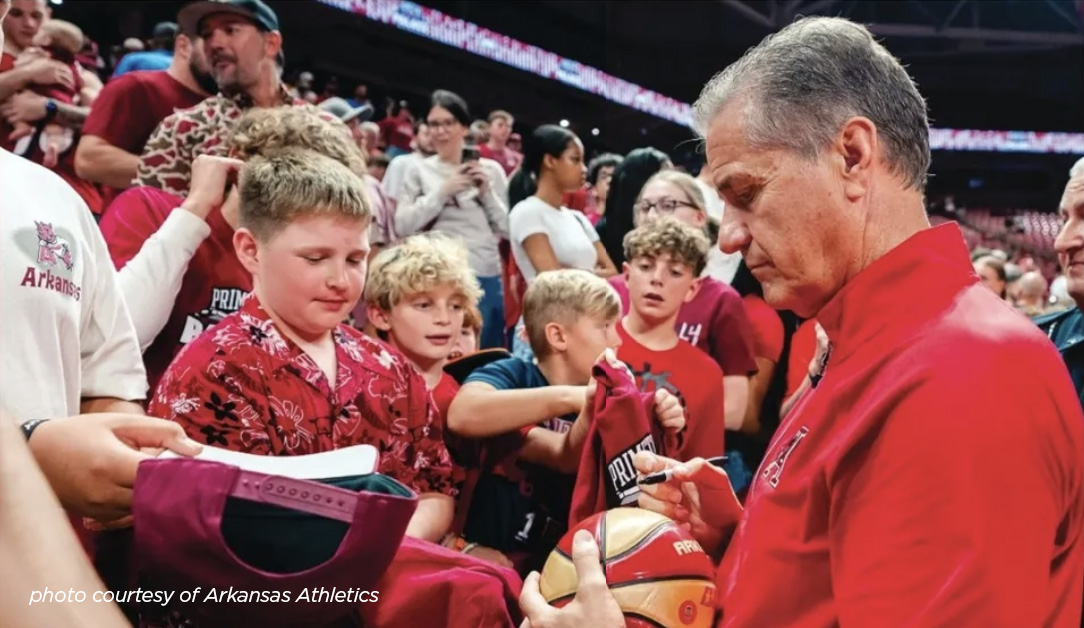
Hearing the pride and care in Coach Cal’s voice toward these former athletes, the correlation seems likely. Though they’ve had to adapt here and there, the couple has been doing things in the same close-knit family manner since the beginning. “I think most coaches try to create that, but it’s got to be authentic,” Cal asserts. “We’ve had players transfer here that tell me they’ve never been to the coach’s house before. We didn’t know when we started doing this — we thought this was just how you do it.”


At this point, Lola has heard enough animated conversation and bursts of laughter and has escaped her puppy pen to keep from missing out. She quickly scampers to a perfect spot nestled between Mom and Dad, and Igor has decided that he’d like to come lie down next to me.
“We haven’t really changed,” Cal continues. “The way we’ve approached it, the way I recruit, what I say in people’s homes, what I say to families — it’s the same I said back at UMass (1988–1996). People will say, ‘Well the game has changed.’ Yeah, but dealing with people hasn’t changed. Aspirations, goals, what the families want for their children … that hasn’t changed.”
During those early years at Cal’s first head coaching assignment at the Univerity of Massachusetts, the Caliparis were raising young children of their own, and he praises Ellen for shouldering the bulk of the parenting duties, especially early on. “I tried to shelter them from what he did and what others had to say about it — to normalize everything,” Ellen remembers. “And I used to wonder, ‘Can you raise normal kids in an abnormal environment?’” The abnormal environment of growing up in various cities, cultures, and being around players from a wide range of backgrounds served to broaden their children’s perspectives from an early age. Now, as adults, Erin, Megan, and Brad are thriving on their own and making differences in some of the very areas their dad coached in their youth … and Mom still hears from them every day.
Once the kids were grown and out of the house, Ellen’s role in the public eye began to change. Cal shows excitement that she’s doing speaking engagements here and there, though she admits it’s a stretch for her. “Part of it is who I am,” she shares. “I’m the one in the background — I’m the shy one.” She may not be outspoken, but her demeanor and presence is making an impact on the players, as well as Razorback Nation. Both John and Ellen reveal they were raised with a mindset of giving back or paying it forward, and as a couple have quietly contributed to charities and causes for decades. They even established The Calipari Foundation as a means to make a difference, mostly around children’s causes, and to inspire others to use their influence to do the same. Even in less affluent areas, the couple have been able to raise millions for various causes. Acknowledging the platform that comes with the coach’s seat, Cal insists that “you cheat the position if all you’re worrying about is basketball. You can move people for good or move people for bad. If there’s something out there that we think we need to be involved in, we usually jump in.”
The couple met in the early ‘80s at the University of Kansas, where Ellen worked in the business office, and John was just getting his start as a volunteer assistant. When people ask if she married him for the money, he likes to joke that “she had the money. I had none when we met … now, she stays with me for the money.” Throughout our time with the Caliparis, the conversation is punctuated with moments like this, and it’s easy to see why a generation of players have been so impacted by the levity and authenticity the pair bring. I asked what they like to do together the most, and their shared answer is simple: “Laugh.” “Not with each other, at each other,” Ellen specifies. They finish each other’s sentences, have each other’s back, and they’re the kind of people you want to have in your corner.
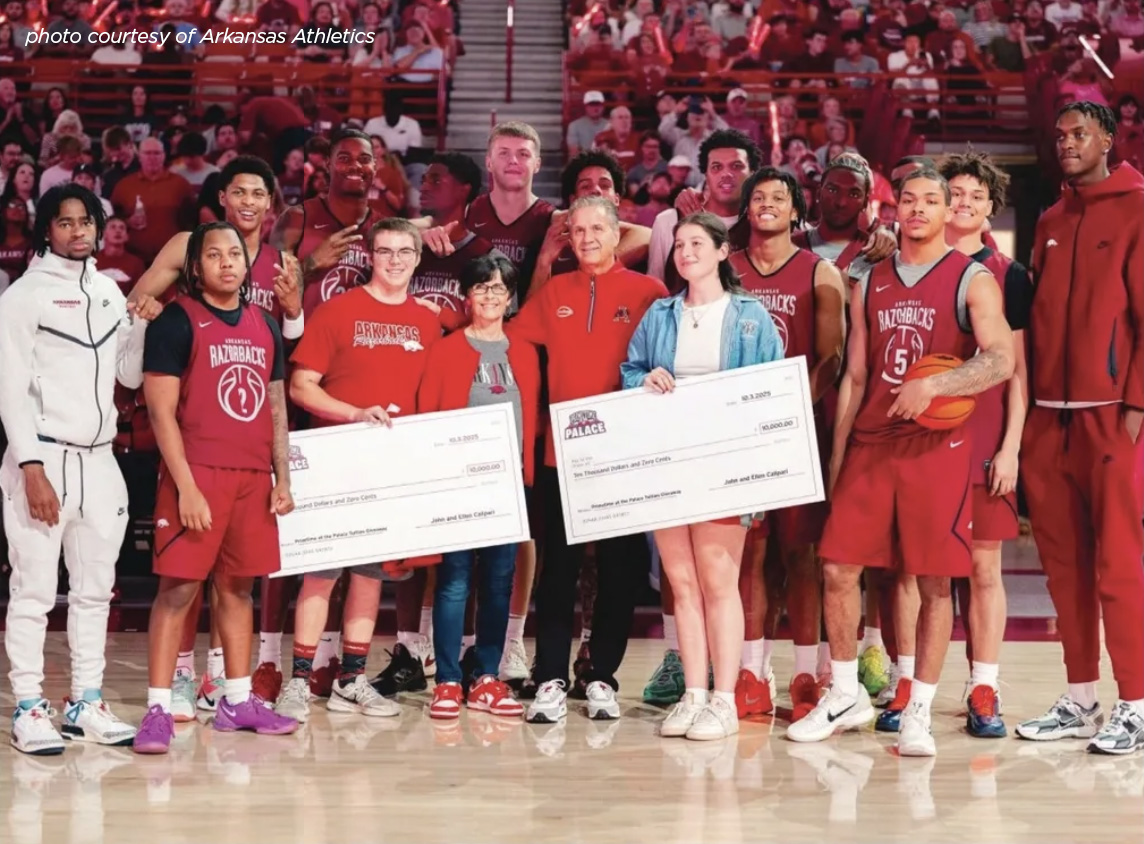

When the Razorback Men’s Basketball coaching opportunity presented in 2024, Cal remembers saying to Ellen, “Well, do you think we can do this one more time?” To our collective delight, she agreed they could. “People tell us they’re happy we’re here, but we are, too,” she says. “We’re not faking. This is home.” They’re near family here, and Cal confirms that they have what they need to do to accomplish the goal: “We’ve got a team of great kids. We’ve got the facilities we need. We’ve got the fanbase we need. Everyone has the same aspirations, and only a few teams will end up being those last 16, 8, 4, 2, 1.” They are confident that what they’ve done in other places, they can do here.
While winning is an inherent objective, it isn’t everything, and doesn’t happen in a vacuum — it’s the result of planning, precision, and an overall vision. What the Arkansas Razorbacks athletics program has built works in tandem to help our players compete at the highest level on the court and perform their best in the classroom. “As we build these kids up and help them succeed, they help us win,” Coach adds. “We want to out-care all the other coaches — and there may be others out there trying to out-care us. It’s a great challenge.” At the end of the day, John and Ellen Caliparis’ aim is to leave a lasting impact on lives, recognize and bring out the best in those around them, and for everyone to reap a shared benefit from the collective efforts.
And, really, isn’t that the definition of a coach?
This digital version of the cover story is provided courtesy of Celebrate Arkansas Magazine for free online viewing. Enjoy our in-depth features and insights, brought to you digitally while preserving the quality and integrity of our print publication.
Like what you’ve read?
View a full digital copy of this issue for free now. Enjoy stories like this and so much more in each copy of Celebrate Arkansas.