Animals with the right temperament for therapeutic work often require extensive training.
Keepers need to know that a sudden environmental change or an excitable child or a nervous rider won’t agitate or distress the animal. Obedience, desensitization, socialization, specialized training to accommodate different abilities and needs can all take months or even years to learn. Unless, of course, you’re the chillest little guy on the block.
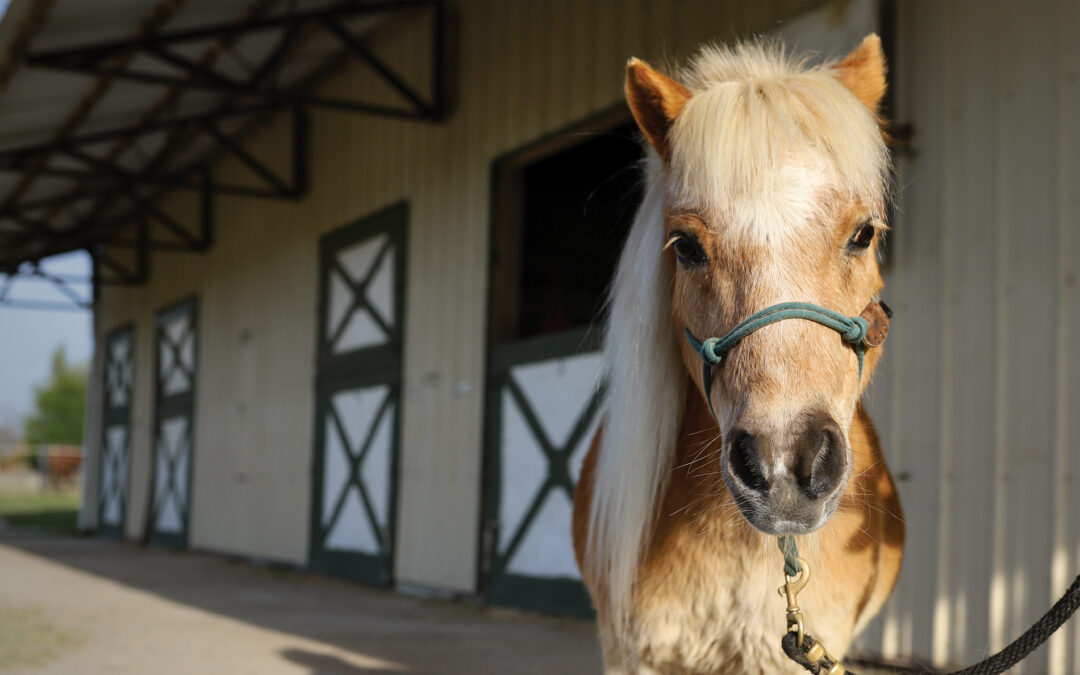
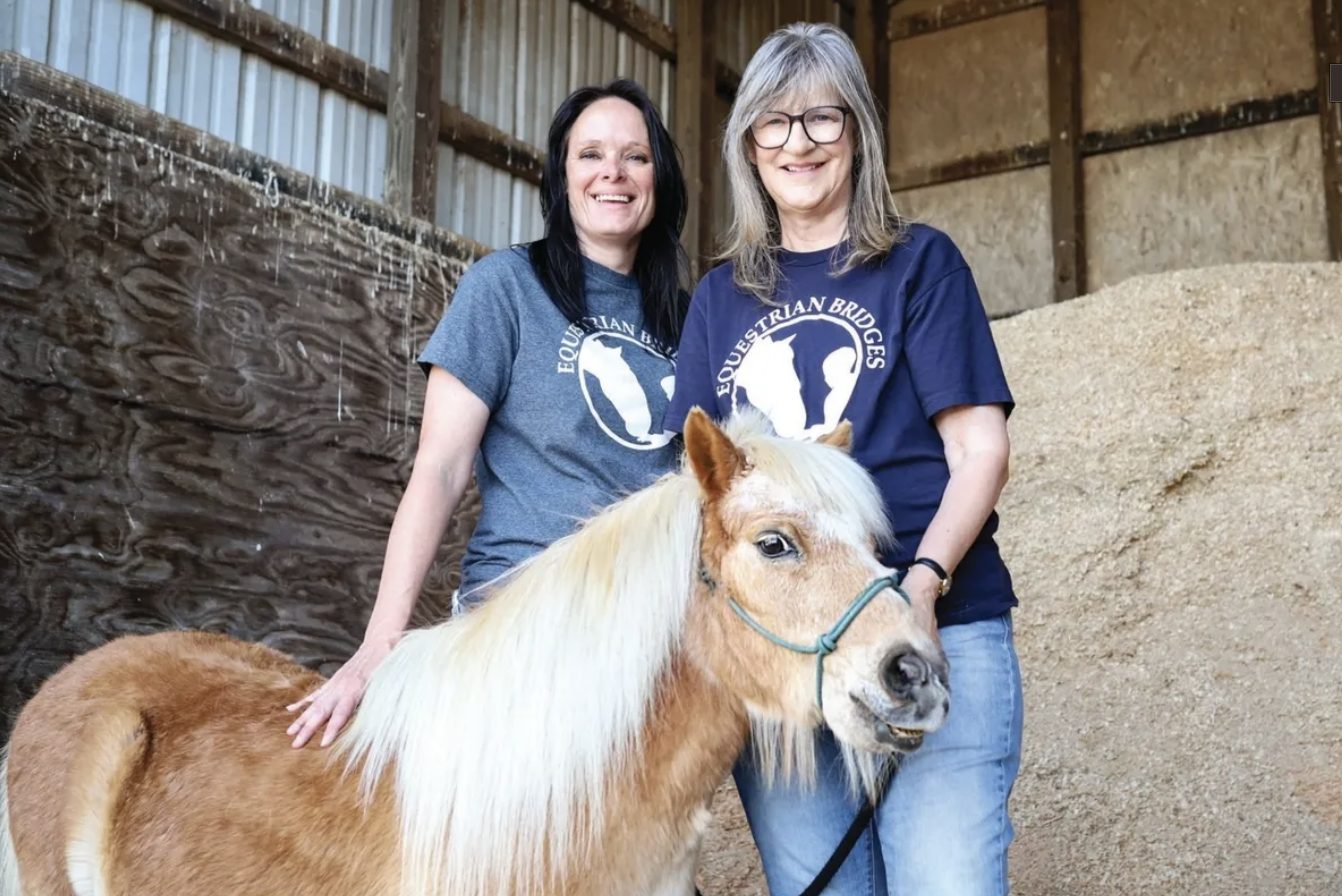
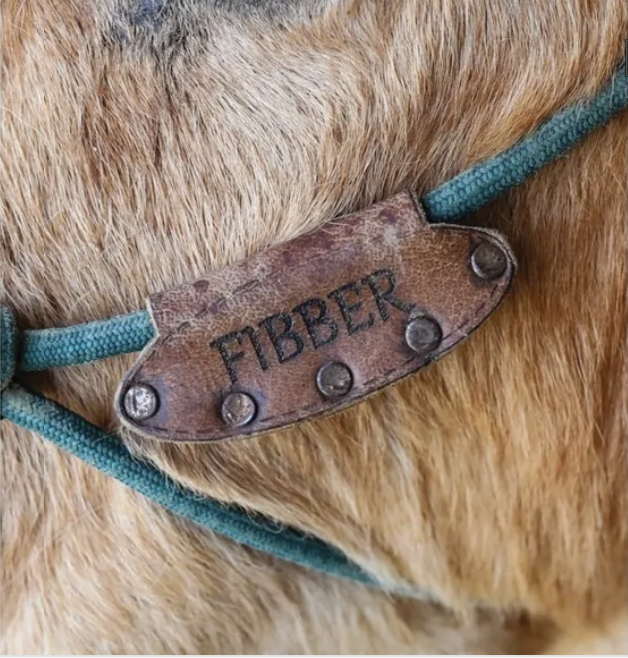
Fibber, a golden palomino miniature horse with an extra-fluffy coat and gentle demeanor, has been a cornerstone of the equine wellness program at Rogers nonprofit Equestrian Bridges since its founding almost 20 years ago. He’s something of a local celebrity — outings to farmers’ markets, schools, nursing homes, even parade floats filling his social calendar — all around his normal work schedule as a therapy horse. But Fibber, it turns out, was born for the job. As the very first horse in the herd, from the beginning he nonchalantly took all these responsibilities in stride — albeit a slow one.
“He was just the sweetest miniature horse ever, always the first to come up to you in the pasture,” remembers Shanna Dozier, founder and executive director. “He was the first to want some pets and he just loved being with people, especially kids.” This was back when Equestrian Bridges was just getting started at its first location in Siloam Springs, and Fibber came with the barn. Dozier had never worked with a mini before, thinking of ponies as typically naughty and willful, but he very quickly earned his nickname of Mr. Chill, and Fibber’s easygoing, people-focused attitude helped define what Equestrian Bridges would look for in every horse that followed. “He definitely set that bar. Young horses, you train and train. Well, he came with no training. He just was.”
What began as a program for children with autism gradually opened its doors wider, motivated by the families who kept asking to be included. Siblings were eager for a turn. Intrigued moms led to a women’s empowerment program. Veterans began to show up, followed by individuals navigating anxiety, grief, or simply the weight of a busy life. The stable filled with stories, each one different, and Fibber’s steady, almost meditative presence became something more than endearing; it became essential. Anyone feeling some fear or hesitation, put them with Fibber. A new horse joins the herd, put them with Fibber. He’s the proverbial Welcome Wagon. “The minis set the first impression for a lot of our clientele, especially Fibber, because we can always count on him to be a perfect angel boy,” confirms Kelsey Phillips, communications director. “He gets along with everybody.”
Time and time again, that calm has opened doors in ways no one can quite explain. Dozier still gets a little misty-eyed thinking back on a story from only a few years into the nonprofit. A little girl who joined the program at 5 was nonverbal at the time, and her mom wasn’t sure how she would react to being around horses. But Fibber worked his magic and a few sessions in, her mom shared that on their way to the stable, she heard, “Fibbah, Fibbah, Fibbah,” from the back seat, her daughter so excited to see the little horse. “Those were her first words … at 5,” Dozier shares with visible emotion.
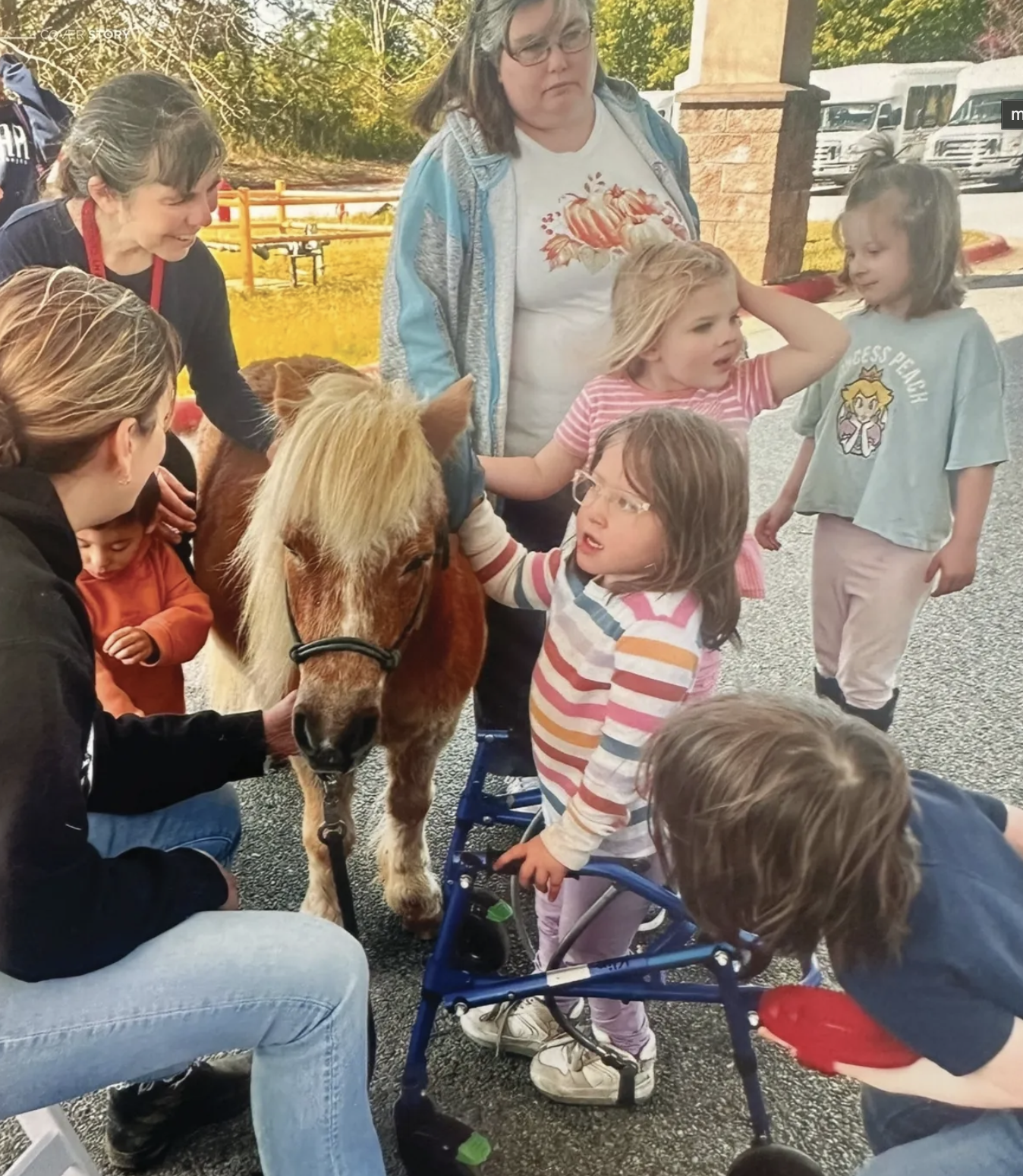
Stories like that aren’t unusual here, even if they don’t always come with such a clear milestone. Kids who start out hesitant and end up confidently leading a horse. Clients who overcome their fear of being near the animals. Families who notice small changes that build over time. Fibber tends to be nearby for a lot of those moments, usually doing something that looks simple from the outside — standing still, accepting attention, letting someone take their time. “We don’t know what he’s whispering in their ears,” Dozier says, “but it’s something that makes them feel calm and safe and encouraged to speak to Fibber.”
His steadiness is one of Fibber’s hallmarks, evident no matter the setting he’s in. At a recent visit to a Rogers retirement home, Phillips brought along another miniature horse to see how she might handle the environment. The new recruit held her own, but Fibber, as usual, set the tone. “He was falling asleep with everybody loving on him. He was a saint,” she recalls with a laugh. It’s a scene that plays out often: Fibber planted firmly in place while a small crowd gathers, hands reaching out, voices softening, the energy in the room gradually matching his.
Sometimes, those visits unlock something deeper. Phillips remembers one resident with advanced Alzheimer’s who, when he saw Fibber, began sharing a detailed memory about his first horse from earlier in his life — something the stunned staff said he had never spoken about before. “He described it down to the horse’s name and the color, similar to Fibber, with a blonde mane and tail. That was really huge to watch.”
.
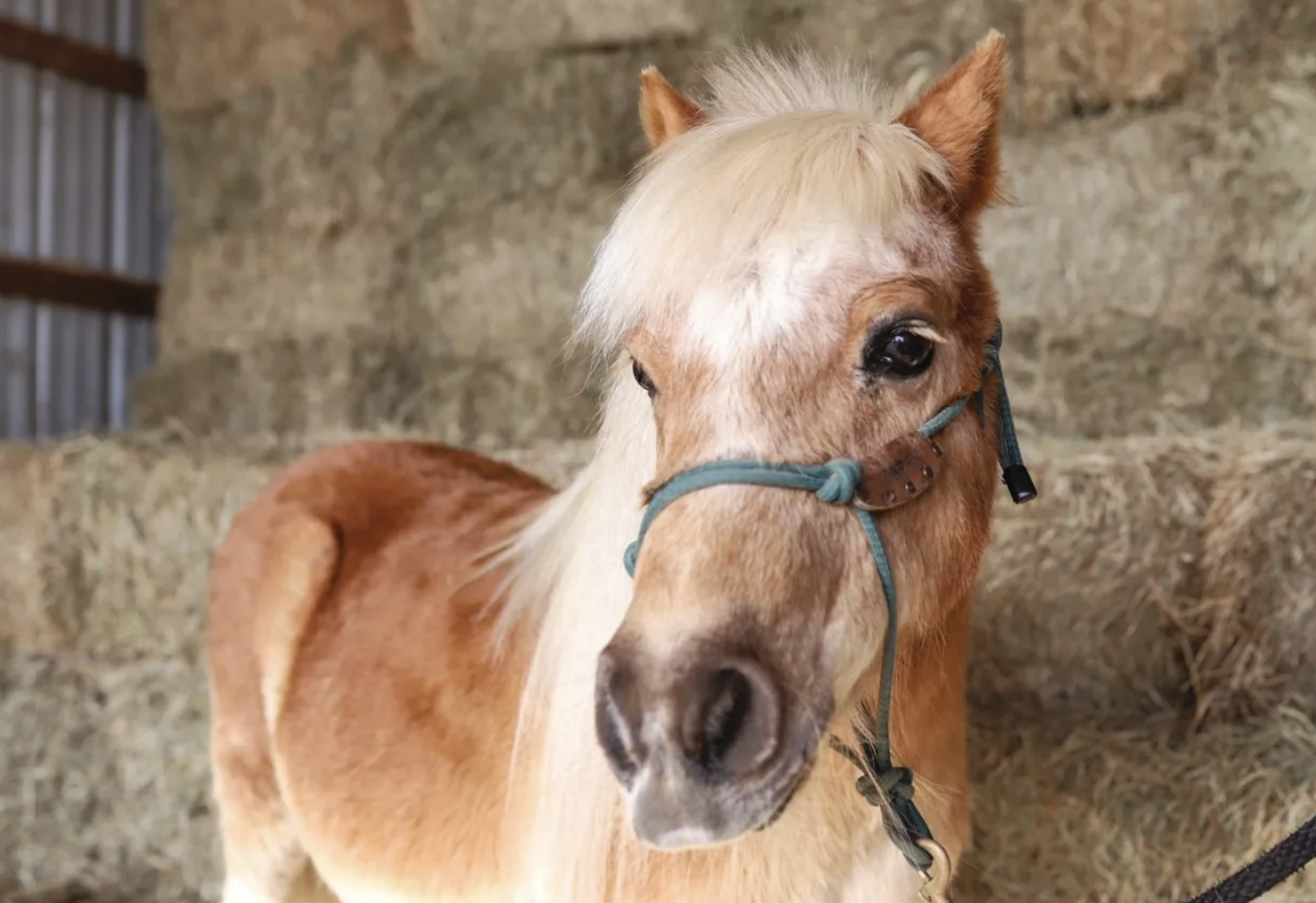
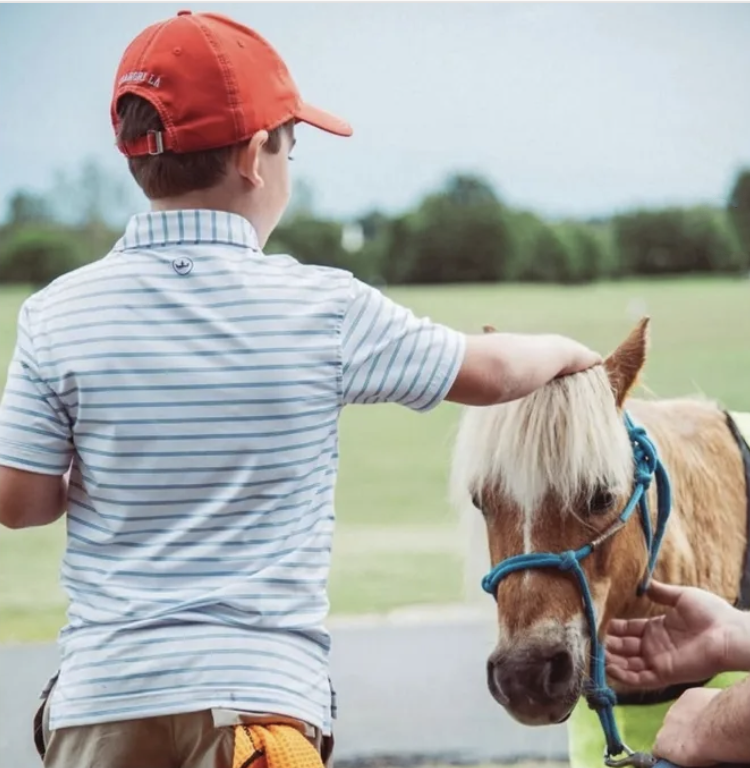
Around the stables, every horse has a distinct “horsenality,” and Fibber’s is easy to spot. He’s not angling to lead the herd, and he’s not stirring anything up either. (Except when he and his bestie, Chloe, get into a little mischief here and there in the paddock together.) But mostly, Fibber lands comfortably in the middle, friendly with everyone and unbothered by just about anything. “He doesn’t have enough energy to be mad. That sounds exhausting,” Phillips quips. She’s joking, but also not really. Fibber operates on his own timeline, and it has a way of slowing everything else down around him. When the rest of the herd is unsure about something, though, he’ll be the one to step up and check it out. “He’s very confident and is the first to say hi to a new teammate,” Dozier explains with the intentional word choice. “We don’t use the horses as tools. We are all a team, two-legged and four-legged, because we all have to work together.”
Though his baseline seems to be perfectly content, Fibber does have preferences, of course. Snacks of grain or hay rank high, with treats like horse cookies reserved for special occasions like birthdays. The real reward is the attention itself. “His favorite thing is getting groomed,” Phillips reveals. “He will just fall asleep getting groomed. He loves having his mane brushed.” It’s easy to picture — the slow blink of heavy eyelids, the slight shift of weight as he leans into a brush, fully committed to the experience. For a horse known for being laid-back, this might be his most impressive trick: making stillness feel like something active, something shared. “Horses command your attention,” Dozier adds thoughtfully. “I think that’s something that we’re missing today. We’re not present. We get so busy, but the horse calms you because it doesn’t care about your past and it doesn’t care about what’s happening in the next hour. It just commands you to be with it in that moment, and that’s so powerful for anyone.”
Coming up on its 20th anniversary next year, Equestrain Bridges has grown significantly since its early Siloam Springs days, expanding programs and preparing for a future on a 110-acre property in Lowell donated by J.B. and Johnelle Hunt that will allow even more people to experience equine-assisted work. The nonprofit will break ground later this year on their vision for a Riding and Wellness Center where, in addition to meaningful programs that serve the community, anyone can come take a trail ride, even on their lunch break. Giving back at Equestrian Bridges, as the team always says, offers anyone in the community a sense of ownership over these majestic animals that give so much in their important work. Caring for the horses never pauses so volunteers are always needed and welcome — with opportunities for anyone to work alongside the herd, including Mr. Chill.
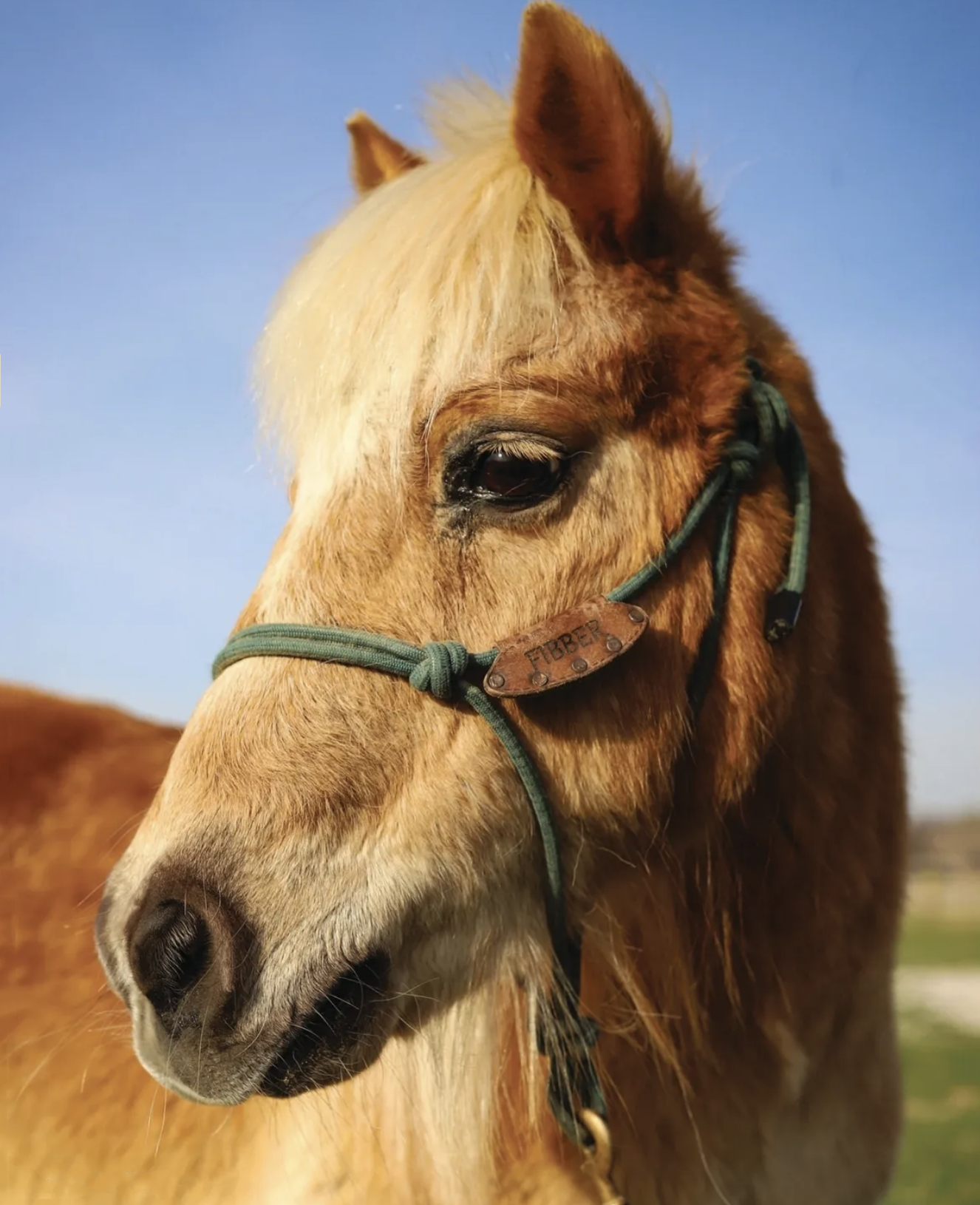
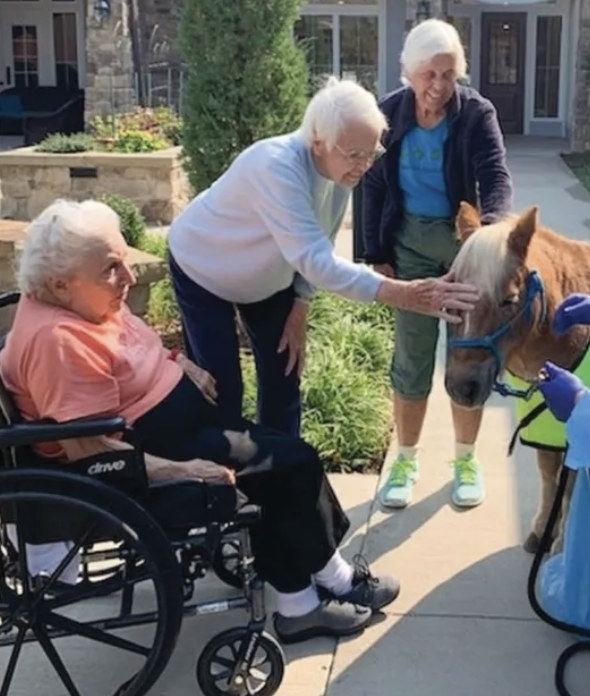
At 20 years old, Fibber is a living thread through nearly every chapter of Equestrian Bridges’ story. He was the first miniature horse the organization owned, the starting point for what has grown into a herd of eight minis and the nine larger riding horses. Each one brings something different to the program, but Fibber remains the standard they measure against. “He’s the prime example of what we try to strive for in every horse that we bring here,” Phillips says. “He’s the perfect formula of what we need.”
People have plenty of theories about why horses can have the kind of effect that Fibber seems to epitomize. There’s research about how they respond to human emotion, how they can sense changes in heart rate, how they mirror what they feel around them. Equestrian Bridges has even partnered with the University of Arkansas to explore some of that. But to Dozier, it’s a little more straightforward. “I think it’s woven into our ancestry. We wouldn’t be here without horses. They were the cars. They were the plows. They were the tractors. They were our warriors. Our ancestors had amazing relationships with horses; somebody in your past, that was their partner. There’s just something about a horse that draws you in.” Whether it’s his soft, fluffy coat, the warmth of his muzzle against your hand, or his soothing presence just being himself, Fibber has certainly drawn in countless people who have been charmed by his sweet spirit. And we can’t think of a better way to celebrate all that he’s given Northwest Arkansas than by proudly naming him the 2026 Celebrate Arkansas Pet of the Year!
This digital version of the cover story is provided courtesy of Celebrate Arkansas Magazine for free online viewing. Enjoy our in-depth features and insights, brought to you digitally while preserving the quality and integrity of our print publication.
Like what you’ve read?
View a full digital copy of this issue for free now. Enjoy stories like this and so much more in each copy of Celebrate Arkansas.