

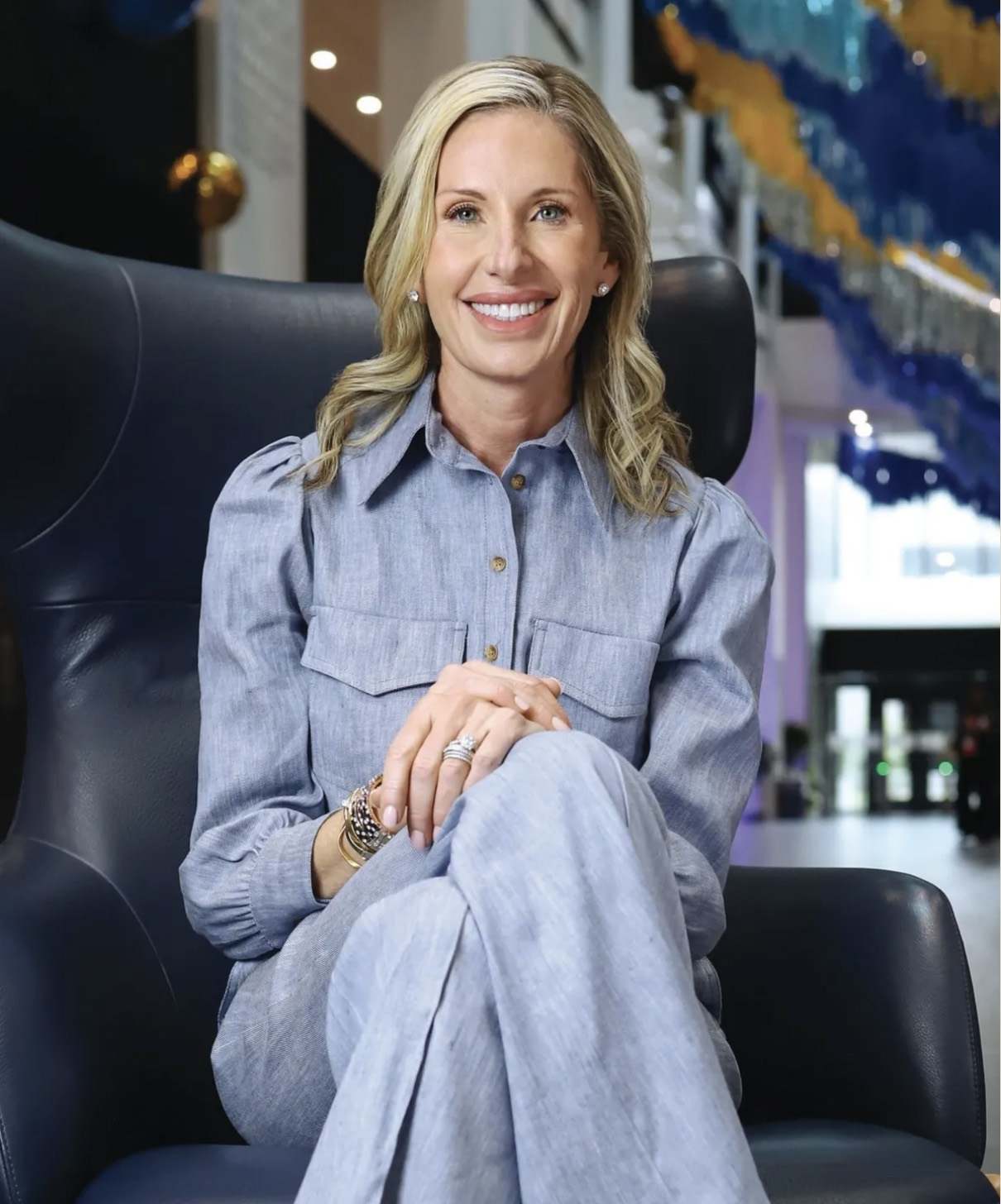
At Walmart, Julie Barber has stepped into the role of Chief Merchant for Walmart U.S. at a moment when the company’s focus on its people is on full display.
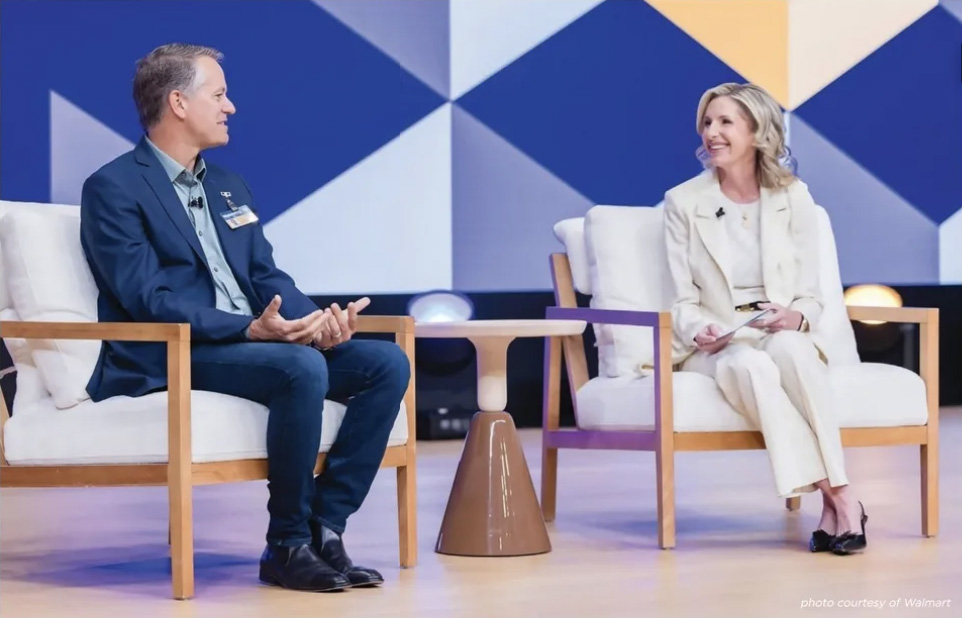
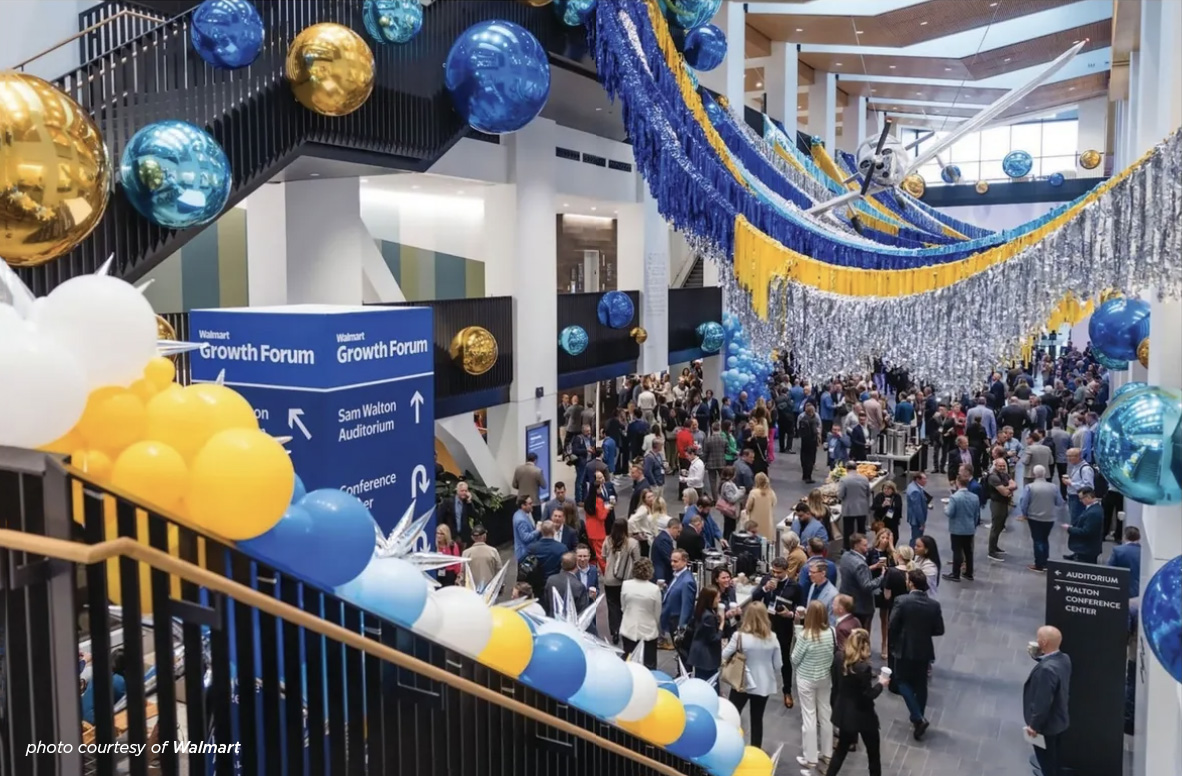
Each June, thousands of associates travel to Northwest Arkansas from all over the world for Associates Week and the celebration surrounding the annual Shareholders’ Meeting — a tradition that honors the scale of what they make possible every day. Across stores, clubs, distribution centers, and offices, approximately 2.1 million associates shape how customers experience Walmart, from the items on the shelf to the way they’re served in the moment. In her new role, Barber leads the team responsible for those items customers find when they walk through the doors or open the app, carrying both the responsibility and the opportunity to keep that experience fresh, relevant, and within reach.
She talks about the work in terms of “access to what’s next,” a phrase that comes up naturally as she describes how her team operates. After more than 20 years with the company, she’s spent her career learning how customers shop and what matters to them when they do. Now, that insight comes together in one place, “a dream job.” Her team moves quickly, tracking what customers are responding to, working with suppliers, and adjusting in real time so the right products show up where they need to be — whether that’s in a store, online, or somewhere in between.
She didn’t get here by staying in one place. Barber started at Walmart as a retail analyst after graduating from the University of Arkansas and has moved through enough corners of the business to see how all the pieces fit together. From an analyst to time with Financial Services and the Innovations team, Julie then made the switch to merchandise with positions across Fresh, Snacks, Consumables and Health & Wellness, and General Merchandise. Most recently, she served as the Chief Merchandising Officer at Sam’s Club. Each stop taught her something different about the customer and the operation behind the customer experience, “kind of culminating in this one place of being right in front of the customer,” she shares. “Working with the team choosing all of the amazing items that the customer wants at the right value is a really fantastic job.”
From her front-row seat, Barber views her merchant team as “personal shoppers for America.” It is a useful way to think about the job because it gets at both the scale of the work and the intimacy of it. Walmart is serving millions of people, but the customer still arrives with a specific need, a plan, a moment, or a problem to solve. The basics have to be there, easy to find, and fairly priced. The delight comes in the unexpected item, the trend discovered early, the thing a customer did not plan to buy but is glad to have found. “It’s a huge responsibility,” Barber acknowledges. “They know what their everyday essential needs are, so we’re going to have those for them — with speed, at the right price.” Then she adds the part that gives the work its spark. “There’s also this amazing element of discoverability.”
Her career has given her a useful vantage point for that kind of work. Julie doesn’t talk about her path as if it were carefully scripted. She talks about it as a series of stretch points: Fresh forced her to learn on the fly. Snacks & Bev brought a new level of supplier complexity. Health & Wellness during the pandemic changed her outlook in a deeper way because the work had to respond to urgent needs in real time. “We had to totally transform the way that we thought about not only what I was working on for the customer, but also for our associates,” she explains. Access to tests, masks, and basic essentials became a matter of urgency. “That was an amazing pivotal point in my life where I realized, ‘Wow, this is why I do this job.’ I do this because I can help people save money and live better. There is something really cool about it.”

The same kind of pressure reshaped general merchandise. Inventory decisions shifted as demand moved faster and e-commerce expectations kept rising. Barber describes a business that no longer gives teams the luxury of long lead times. Where trend-spotting and product development once took weeks, months, or even a year, the cycle is shorter now. New tools have helped speed things up, but she’s quick to point out that speed only matters if it holds up to the basics customers still expect every time they shop. “The customer still needs very strong reliability. They need to know that when they buy something from us, it’s going to be amazing quality at a great price, and that they’re going to get it on time,” Barber asserts before adding that, “being relevant in the assortment is probably the part that’s the most important.” So, she says, the balance is maintaining that underlying reliability while nimbly responding to an ever-changing retail landscape.
Looking at the customer journey, Barber talks about “missions and moments,” which is a more human way of describing how people actually shop now. A birthday party. A holiday dinner. A quick household fix. A school event. A weekend project that starts with one item and ends with four. Technology helps pull those pieces together, especially as Walmart uses marketplace tools and AI to identify trends and bring them forward more quickly. A short-term trend may stay on the marketplace. Something more lasting might move into stores. It gives the company more room to respond without becoming scattered. For Barber, the best systems are the ones that help the customer get the job done without feeling like they had to fight the store to do it.
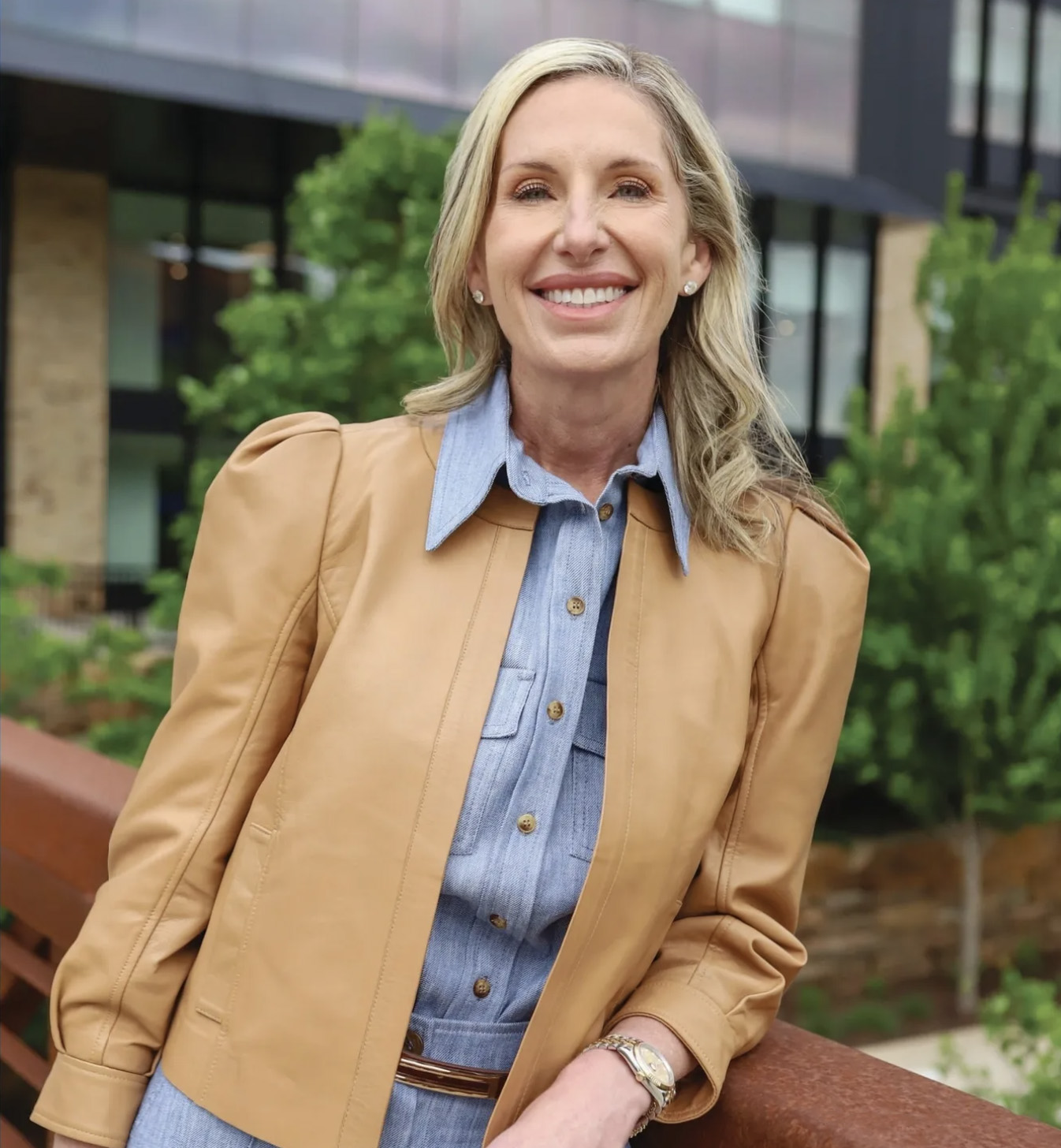

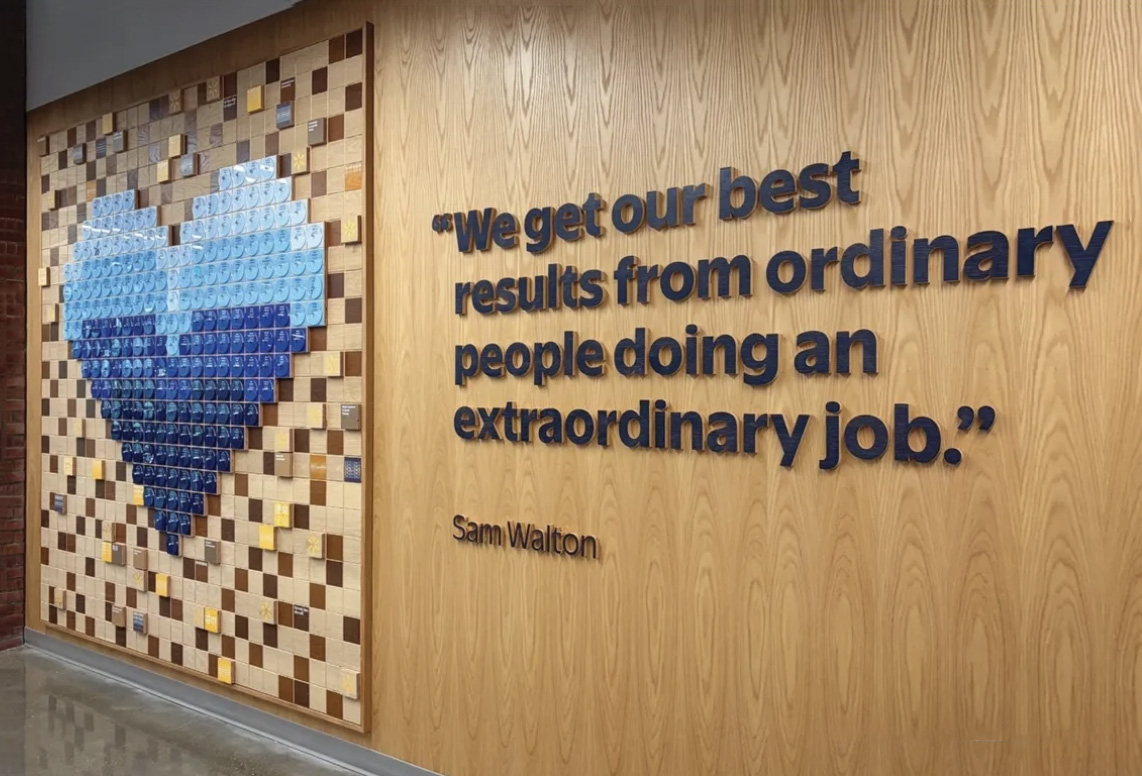
She sees the same principle at work for associates. The company’s future, in her view, depends on giving people the tools, the room, and the confidence to rise into what comes next. When she talks about mentorship, her language shifts from strategy to purpose. “That is my purpose,” she says plainly. “The whole reason that I do this job is about the people.” Julie has had mentors who opened doors for her, introduced her to other leaders, and helped her see possibilities she might not have seen alone. Now she tries to do the same for others. “I found really early in my career that I loved leading people, and I love helping them get to their next role and helping them believe that they can do anything. Then, when you actually get them to see their full potential and they start making strides, it is the most amazing thing.”
She recalls one particularly meaningful moment during a town hall earlier this year, announcing her new position. When Julie asked how many people in the room had worked with or around her at some point in their careers, hands went up all around the packed auditorium. “I looked out there and realized that I’ve also had the opportunity to work with so many of them,” she reveals, and you can hear the pride in the memory. “I’m always looking for who’s the next person? Who’s going to take this job, and how do I help them get there?”
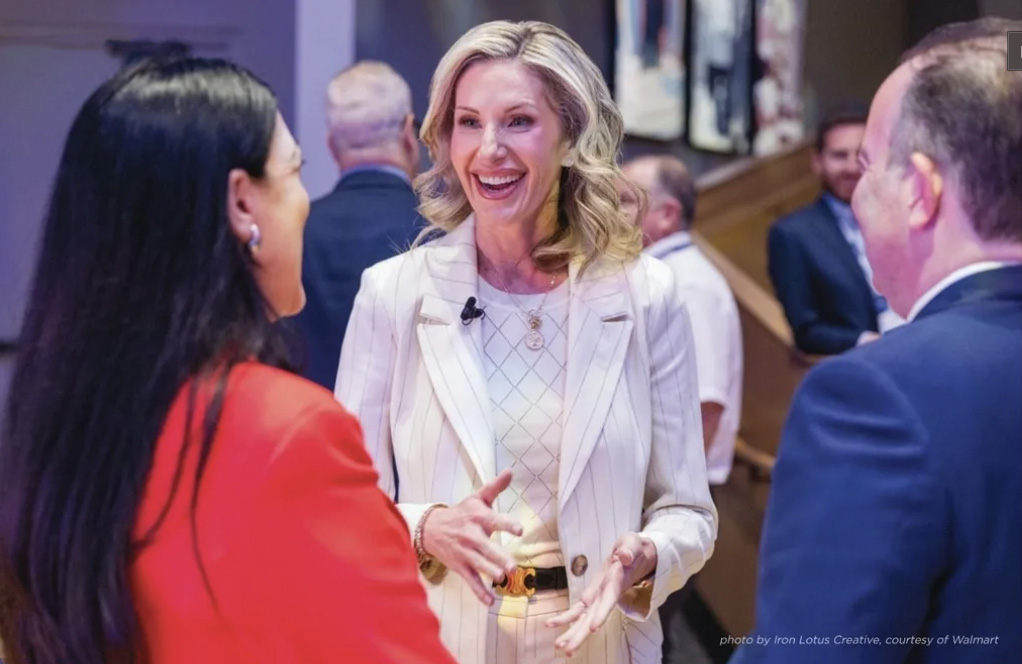
Knowing how strongly mentorship is intertwined with leadership for Barber helps explain why she is so intentional about the way she shows up in everyday moments. “I say hi to everyone because I want people to feel like I’m approachable and authentic.” Though she admits to being an introvert at heart, Barber’s effort to meet people where they are is deliberate, whether that is in an elevator, a hallway, or while crossing campus. “You’re walking down the hall and you see someone, you don’t put your head down, you say hello to them. I love that about our company.”
During our time together in late April, it was easy to see what she means. Barber greeted people as they passed, flashing her warm and inviting smile, offered a quick hello, and stopped for brief exchanges that never felt like interruptions. It’s pretty impressive to watch the company’s leadership philosophy play out so purposefully right in front of you, but it’s also evident in how leadership is structured across the campus. Meetings are not staged from a distance or framed around hierarchy in the way many large organizations default to. People are in the same line of sight, sharing the same space, with conversation flowing in both directions.
That approachability is not just about personality. It is part of how Walmart wants its culture to function, and Barber seems to embody it without effort. She wants people to feel that leadership is accessible, that ideas can move upward, and that a title does not have to create a wall. At a company this large, small gestures matter. They’re one of the things that keep a place from feeling too remote, too impersonal. They also help associates see that the people making decisions are part of the same team, not watching — or judging — from the sidelines.
The culture Barber describes is evident in the way the world’s largest retailer supports careers, too. She has seen firsthand how many paths exist within Walmart, and the ways people can build careers that evolve over time. “You can have an amazing career at Walmart; there are so many opportunities to do a ton of meaningful work.” She has watched interns become merchants, merchants move through development programs, and associates build long careers by moving across categories and responsibilities. She sees that continuity as a strength, not a limitation. “People want to stay here for the people.”
You can feel that same sense of connection when she talks about Northwest Arkansas, too. Barber has established her career here while also building a full family life, and she does not pretend the balance is tidy. Julie and her husband stay active with bike rides, time outdoors, and a steady stream of youth sports and dance schedules. Their three children keep the house lively — her son is 17, and the twins are 12; a boy and a girl. Baseball, golf, and competitive dance fill much of the calendar. “We spend a lot of time with that,” she says of the familiar mix of long days and full hearts any parent will recognize. “At some point we’ll miss it all, so we might as well enjoy the busyness!” She also makes time for the community work close to her heart, including the American Cancer Society and Boys & Girls Club of Benton County Boards of Directors, and leading the University of Arkansas Retail Advisory Council where she is deeply invested in helping people find opportunities that will set them up for success.
Walmart’s priority on giving back allows such work to be embedded in Barber’s leadership. She talks about the company’s support for board service, volunteer time, and giving, and she appreciates that those commitments are not treated as distractions from the work. “You don’t have to be worried about taking time off to go do things like that; it’s very much encouraged.” The retailer’s community efforts are visible in all kinds of places, from service days to programs like Fight Hunger. Spark Change, and Barber sees those efforts as part of the same culture that makes associates feel connected to something larger than their own job. That matters to her because she believes a company should be able to do well while also showing up well. The two things, in her mind, should travel together.
As she looks ahead, Barber keeps returning to impact. She sees a huge opportunity in the assortment her team is building and the way it can reach millions of customers with better value, stronger relevance, and continuing to develop great relationships in the Supplier community. “But, how do we raise the bar? How do we continue to surprise and delight?” she posits. The work touches customers, associates, the Home Office, and the broader region in ways that are hard to separate. “So, for me, it feels like the heart of Walmart starts with the assortment, and that is what the team is doing such a great job finding.” It all begins with what people can access, what they can discover, and what the company makes possible.
When Julie turns to advice for associates, especially those just beginning their careers, her answer is immediate. “Rise to your full potential. Don’t think that you can’t.” She understands how easy it is to underestimate the path ahead. “When I graduated college, I did not think that I was going to be the chief merchant at Walmart. If I at some point would have made the decision and said, ‘I can’t,’ then I may never have gotten here.” Barber’s own path is proof that Walmart can be a place where people learn, stretch, lead, and keep growing — into what’s next.
This digital version of the cover story is provided courtesy of Celebrate Arkansas Magazine for free online viewing. Enjoy our in-depth features and insights, brought to you digitally while preserving the quality and integrity of our print publication.
Like what you’ve read?
View a full digital copy of this issue for free now. Enjoy stories like this and so much more in each copy of Celebrate Arkansas.