
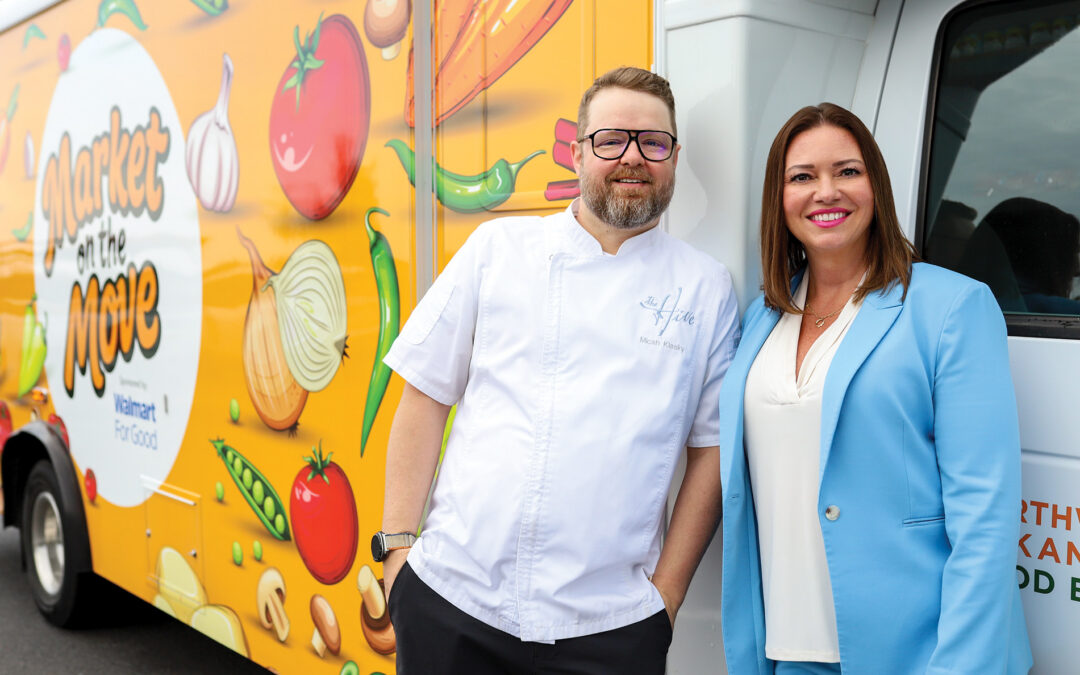
There was always room at the table
table in the home where Micah Klasky grew up. Raised by a single working mom doing what she could to keep their family moving forward, their house became a place where friends and acquaintances could find something to eat, a place to stay, or simply be somewhere everyone was welcome. “We weren’t the haves, but we weren’t the have-nots. You could count on there being food in the fridge. It’s very Arkansas of me, but there was always a bowl of Rotel going around,” he says now with a chuckle. A cycling cast of regulars was part of the household, and for a time his mother even rented rooms out to friends. “Growing up in a home where taking care of people and making sure that you had a place to go and something to eat was always important. Our place was where you could be, and I take a lot of pride in knowing that.”
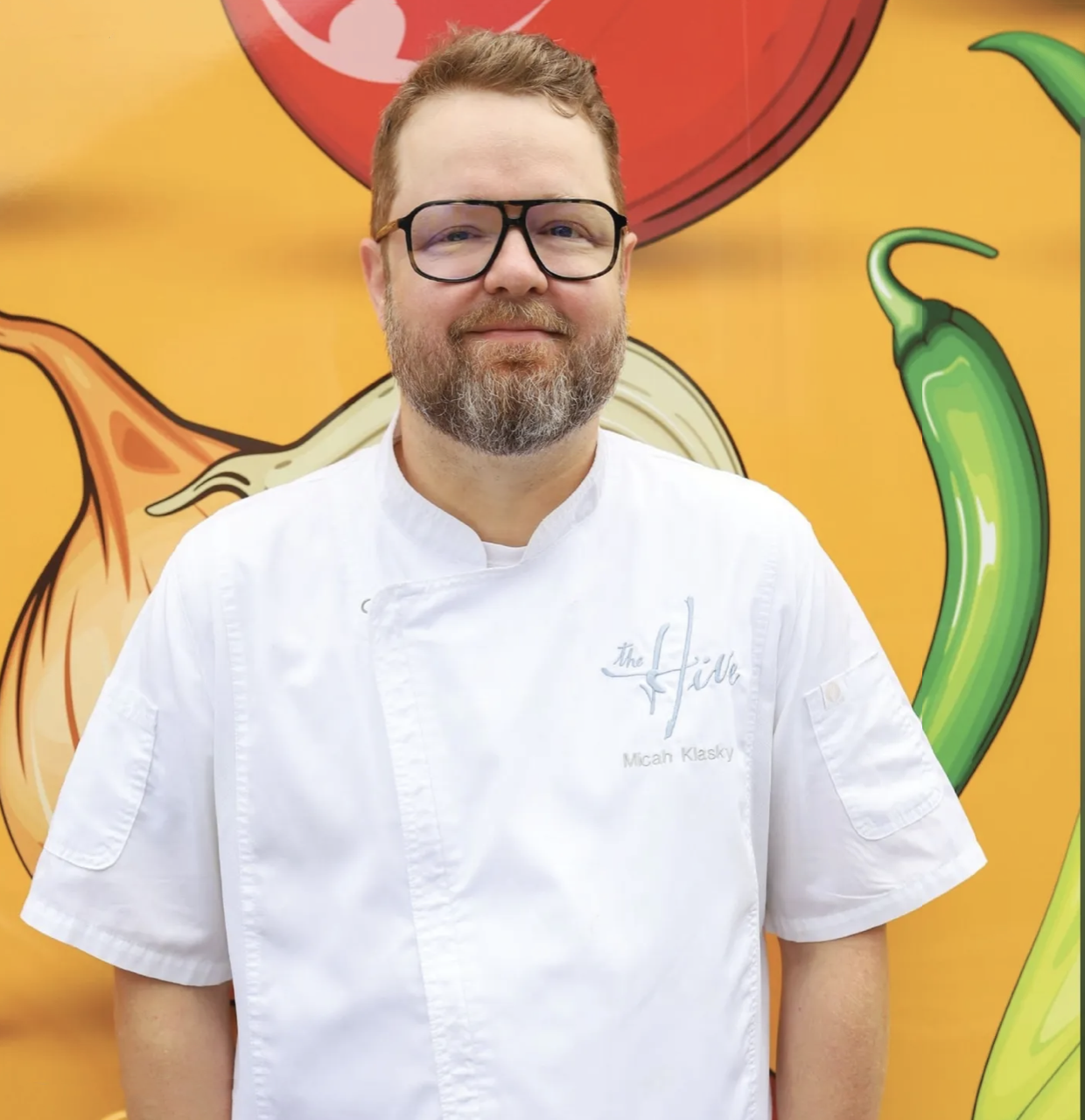
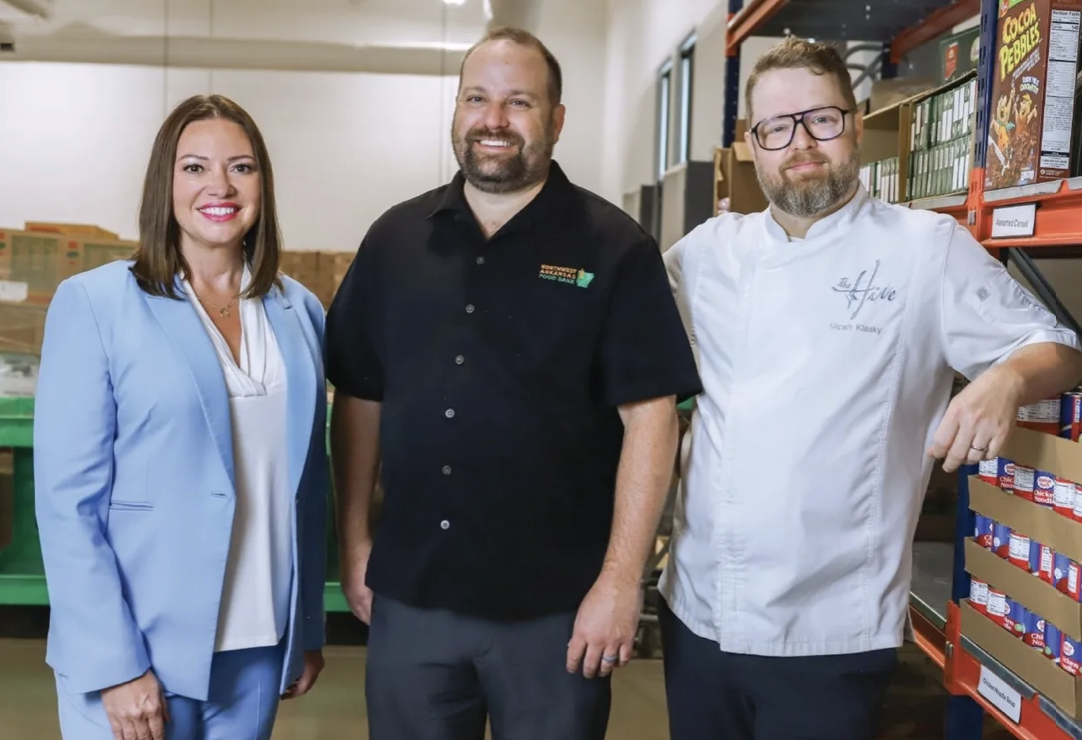
As a “broke, sort-of college student” in Jonesboro, he discovered that cooking could be another way to make people feel welcome — enjoying the challenge of rummaging through the cabinets and figuring out what he could concoct with whatever was on hand. “I was really good at turning pennies into dollars when it came to food. I loved making food for people.” It wasn’t until he was working on a speech some years ago that Klasky fully realized how much his mom’s example had influenced him. He remembers becoming emotional while writing as he connected his instinctual sense of hospitality to the way she had cared for others. He sent the speech to her afterward, hoping to return the favor by eliciting a few happy tears of her own. As executive chef at The Hive in Bentonville and culinary director for the 21c Museum Hotel brand, he still carries that early lesson with him in his work and his community.
Service, as it turns out, has been a common thread in both Klasky’s life and in Tasha Tandy’s.
When she was a child, she did not have the language to describe what her hard-working family experienced in Texarkana, Texas. She just knew that her parents paid attention to grocery sales, bought private-label or off-brand products, and stocked the pantry when something was on special. “My family was the family that had to make tough choices between food and bills,” she shares solemnly. Life got better and became easier as she got older, but she never forgot what it felt like when every cent mattered. “Those were very real choices that my family made.”
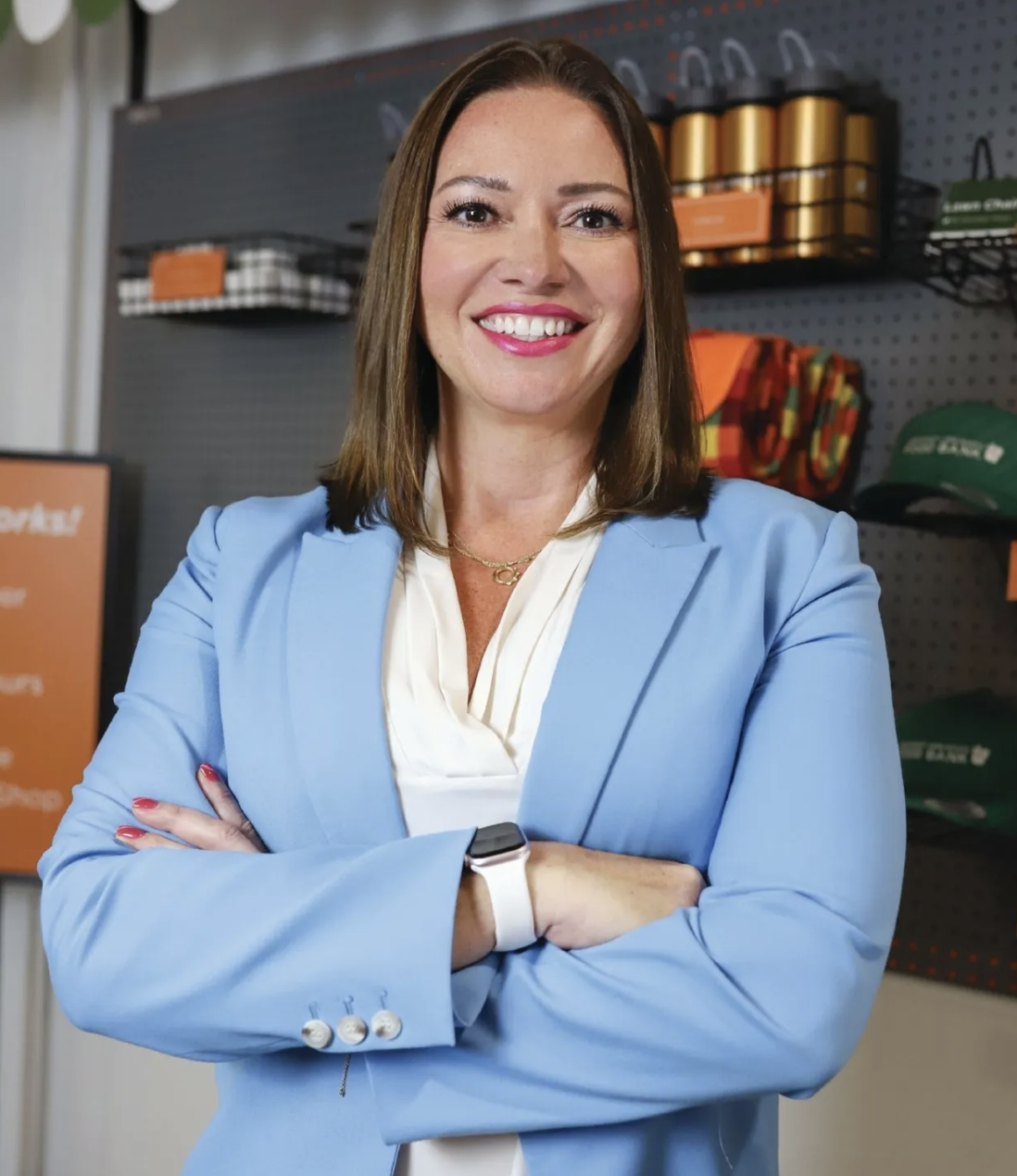
Tandy is the SVP-GMM, Chilled Adult Beverage and Convenience at Walmart, where her work centers on food and the people who rely on it. She thinks often about the connection between the families she helps feed today and the one she grew up in. “Food is family,” she asserts. “Food serves a lot of different purposes; it is a basic need, but it also plays a really important role in the happy moments of people’s lives, too. Yes, my job is to make it affordable and make sure I’m getting the right items to the shelf, but it’s also really rooted in serving that customer and whatever need it is that they’re looking to fulfill. Are they celebrating? Are they eating to change their diet? Are they making choices just to feed their family? The answer is yes to all of those things.” And when families can save money on the food they buy, Tandy adds, that can create room in a household budget for shoes, school supplies, a utility bill, or another necessity.
That is also why the gap between having food available and being able to get the food you need matters so much to Tandy. Despite the region often being associated with prosperity and rapid growth, more than 113,000 neighbors here are facing food insecurity, reveals Northwest Arkansas Food Bank CEO Taylor Speegle. Tandy has trouble reconciling such a number with the community she knows, especially given that the figure was closer to 70,000 a few years ago when she first started interacting with the Food Bank. “We as a community and as individuals have a responsibility. There shouldn’t be any kid who doesn’t get a meal when they need a meal, and we should all use the resources, skills, and ability we have to fill that gap.”
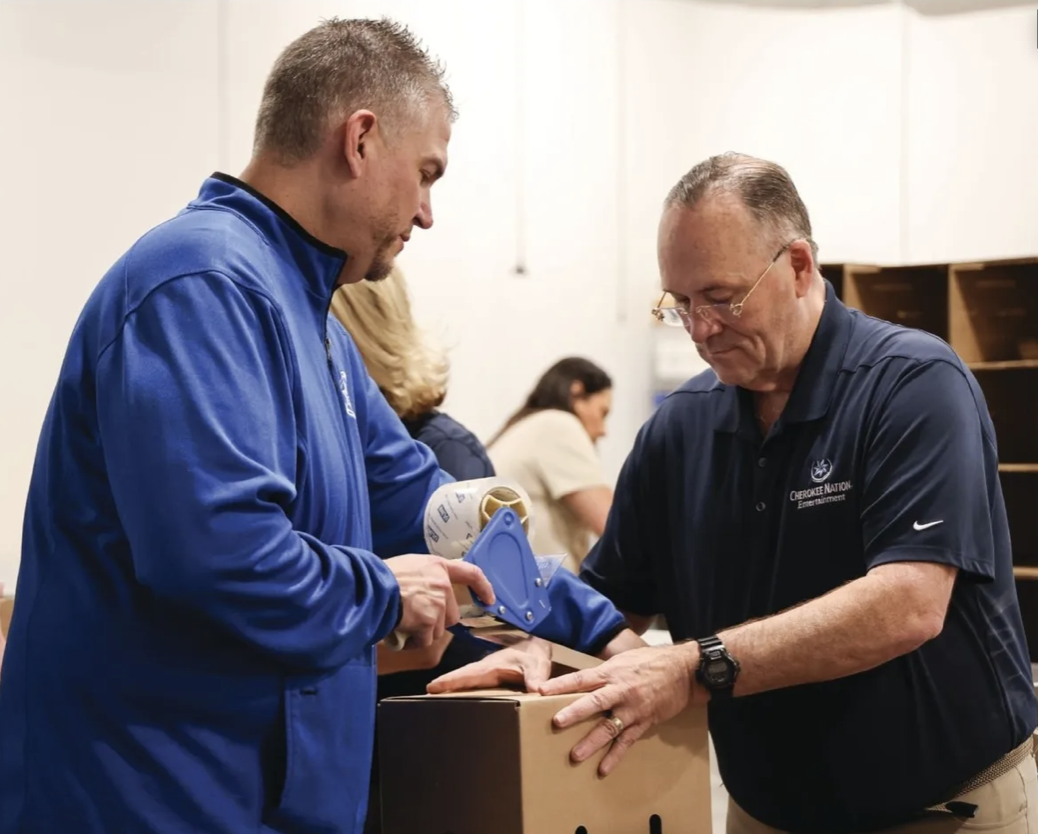
Klasky had a particularly close look at that disconnect last year working on a pilot program through the nonprofit Rethink Food. In partnership with the Food Bank, he helped hand out boxed lunches at the Second Street Pantry in Bentonville alongside the weekly grocery distribution — the lunches all prepared from excess restaurant food and donated products to mitigate restaurant waste. The experience challenged a common perception about who needs help. An affluent ZIP code, a thriving local economy, or a recognizable community name does not tell the whole story of what is happening inside a household.
“People think that just because we live in Bentonville, we’re covered,” Klasky says, describing an assumption he has encountered. “And that’s just not the case. It seemed like more and more and more people were showing up each week. The need was baffling.”
The pattern also highlighted another challenge for the Northwest Arkansas Food Bank: Having food available isn’t enough if our neighbors can’t easily access it.
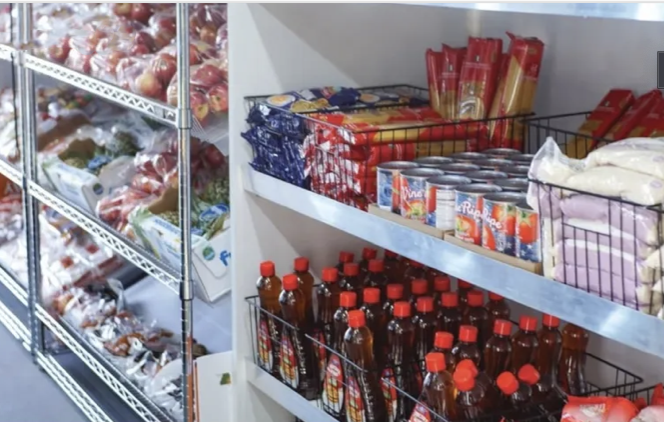
Transportation can be a barrier. So can work schedules, childcare, geography, or living too far from a traditional food pantry. The Food Bank is diligent in continually monitoring the region’s growth, and by extension, its growing needs, collecting data that has helped identify where those accessibility gaps exist. So, then, what to do with that information once those gaps are found? That question helped give rise to Market on the Move — a mobile grocery program bringing food directly into neighborhoods throughout the region. “We cannot always expect people to come to us,” Speegle reasons. “A traditional pantry is essential, but it cannot be everywhere. Feed Rogers taught us that the experience matters. Giving people the ability to choose food that works for their families creates dignity and reduces waste. It also makes asking for help feel more normal.”
The Food Bank already had programs such as Mobile Pantry and relationships with agency partners, while Feed Rogers had demonstrated the value of a grocery-style, neighbor-choice model. Market on the Move brings those ideas together by putting a choice-based market inside a mobile refrigerated truck. The goal isn’t just to add another place where food can be distributed. It represents an evolution in how the Food Bank thinks about food access, explains Coordinator John Lopez. “The first question we had in building Market on the Move was, ‘What makes for a better neighbor experience?’ That starts with high-quality food and good service.”
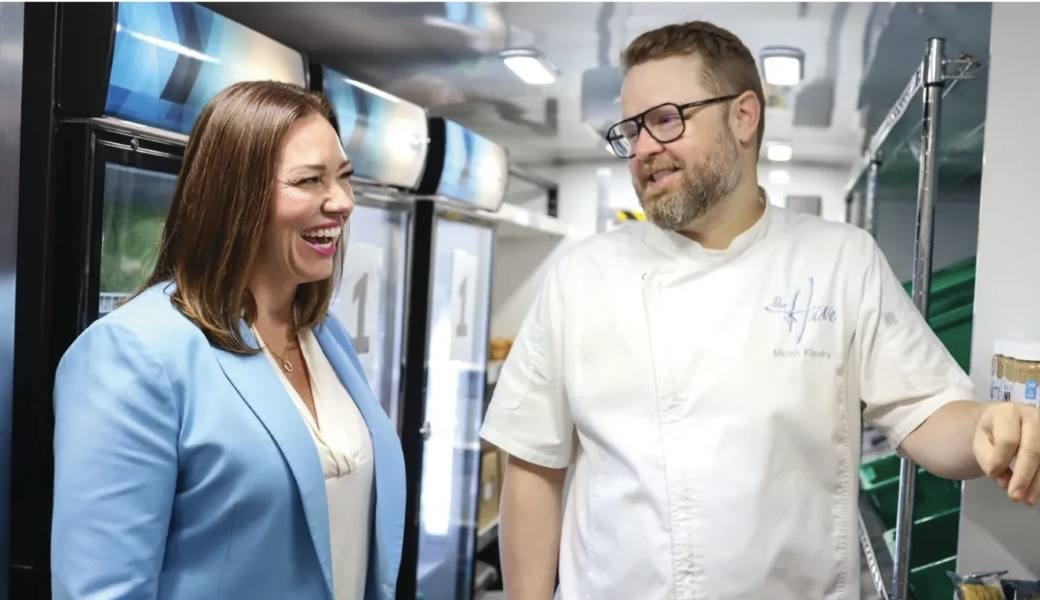
The truck now travels to communities throughout Washington County, with stops in Farmington, Prairie Grove, West Fork, Elkins, and Cane Hill. The Northwest Arkansas Food Bank works with local partners including schools and community organizations to identify locations and coordinate visits. Each site is evaluated for space, car and foot traffic, safety, and convenience. When the truck arrives, neighbors check in, provide limited demographic information, and then walk through the market to select the foods that best meet their family’s needs. Frozen protein, produce, and shelf-stable items are available at every stop, while volunteers help answer questions and carry groceries to vehicles. The truck has the capacity to serve around 50 to 60 households per stop, which is adjusted according to the population and circumstances of each community.
Early distributions have been encouraging. “We have been operational for almost four months, and the initial response has been nothing shy of great,” Lopez told Celebrate Arkansas near the end of the summer. “While every neighbor served is a benchmark in itself, we have seen some locations grow from 26% of neighbor capacity during their first distribution to 69% by the second. At another location, we reached 100% capacity during the first distribution. The program continues to grow, and the work is a reward in itself. I am excited for the future of Market on the Move and truly thankful for the opportunity to be part of it.”
Organizers know that the experience on site is equally important to the access. Market on the Move’s bright, cheery color palette is a friendly beacon. And just like at the Food Bank and any of its programs or pantries, volunteers with the truck warmly welcome neighbors with smiles, eye contact, and compassion. Visibility will help spread awareness and, hopefully, combat the stigma of asking for help in a lasting way. Bringing the Market to events like a school open house and familiar community gathering spaces, for instance, can help children grow up understanding that resources like these are available, and that using them is not something that needs to be hidden.
That setting matters to Klasky because he has seen how emotional the first request for help can be. During his time working with Rethink, he remembers a woman approaching the distribution for the first time. She did not know what to do or where to go, and by the time Klasky handed her a meal, tears were streaming down her face. “It’s hard to ask for help. So, finding ways to let people know that this is what we’re about, we’re happy to do this — we’re excited you’re here — helps break down that barrier.” He wants each person to believe that this program is not an anomaly; it’s not something for somebody else. It is for everyone. “I told her, ‘Hey, come back next week! I hope to see you again. Please come back.’ I hope to see you again was the last thing I said to her. And it was one of the most impactful moments I’ve had. It rocked my world.”
Both Tandy and Klasky talk about how lucky they are to be in positions where they can contribute to this work. Walmart’s scale means that decisions made within its food business affect millions of families, and Tandy feels the weight of that reach. It begins with the everyday work of making quality food affordable and accessible to the people who shop at Walmart, but a huge piece of that is also the responsible management of product throughout the entire ecosystem. She and her peers are tasked with “doing good all the way along the pipeline,” Tandy explains — from buying and sourcing responsibly, to being conscious of the retailer’s impact on the farming community, to ensuring they are respectfully servicing all the varying demographics and cultures that turn to Walmart for their food needs. And because of Walmart’s special relationship with the community in which it was built, associates are encouraged and supported in using their talents to give back. “We often say at Walmart, ‘If not us, then who?’ I think about that a lot. If my platform can make a difference to bring more awareness so that we can close that gap, then it’s time well spent.”
Klasky agrees, adding, “and with that platform comes a voice. If I’m not trying to use that to the betterment of my community and the world around me, then it’s sort of a waste.” Moved to join the Food Bank board earlier this year, he has learned that the most effective work rarely belongs to one person. It takes chefs, restaurants, businesses, volunteers, nonprofits, and neighbors deciding that what they have to offer can be useful to someone else. “Finding ways to utilize the tools we have at our disposal was a huge turning point for me and being able to connect that to the Food Bank is really fantastic.” A restaurant can provide food and expertise. A business can provide resources. A volunteer can give an afternoon. A community organization can help identify a neighborhood where the truck should stop.
Speegle hopes Market on the Move can build on that collective effort by reaching people who have not previously connected with food assistance, and helping families move from crisis toward greater stability. “Food may bring someone through the door, but it also creates an opportunity to connect them with other resources that can help them move forward,” he says. “Food alone cannot solve every challenge a family may face, but it can create breathing room to take the next step.”
This digital version of the cover story is provided courtesy of Celebrate Arkansas Magazine for free online viewing. Enjoy our in-depth features and insights, brought to you digitally while preserving the quality and integrity of our print publication.
Like what you’ve read?
View a full digital copy of this issue for free now. Enjoy stories like this and so much more in each copy of Celebrate Arkansas.