
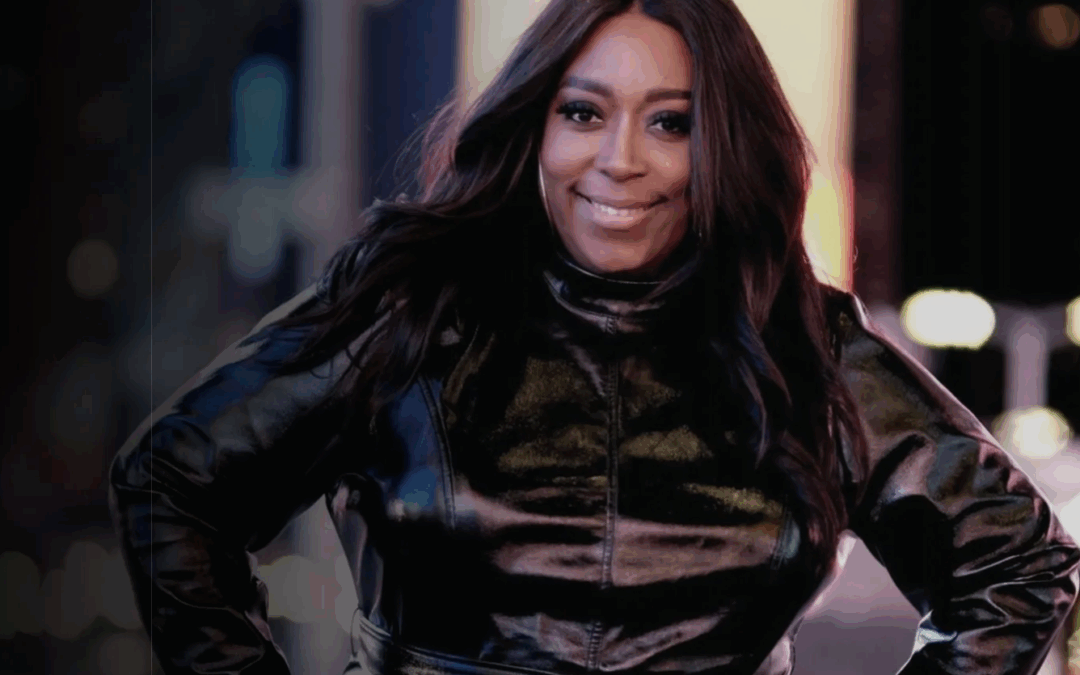
Loni Love reveals in her 2020 part-memoir, part-comedy advice book that the foundation of her comedic chops was laid early — elementary school early, as she “cut my teeth as an entertainer doing stand-up in Miss Kilpatrick’s second-grade class.”
By the time she moved into third grade, she continues in the first chapter, she’d told so many jokes that year, “I had a solid seven-and-a-half-minute set!” In that cramped Detroit classroom, the rule-following, self-admitted teacher’s pet learned to hold a room long before she ever saw a spotlight. Drunk on the power of being trusted as the student “left in charge” any time Miss K. had to step out, Loni felt something stir in her when the hilarious impressions of their teacher she started workshopping had her rambunctious classmates howling in their seats, rather than launching into chaos the minute the door closed. It was play at first, an experiment in attention. But those early “sets” didn’t just hint at her future — they revealed someone who would one day stand unapologetically in her own voice, even when others tried to rewrite her lines.
Refusal to conform is a throughline in Love’s life. Growing up in the infamous Brewster-Douglass Housing Projects during the height of the crack epidemic, young Loni often had to look out for herself while her mother’s time was taken up caring for her special-needs older brother, working long hours at the hospital, and her bustling dating life. The lucky timing of a few advocates and guardians who have entered Loni’s story at various points only reinforces the strong faith that she credits with shaping her path — that and her love affair with the French horn and devotion to math club keeping her out of trouble during school. Later, as a taller-than-average, curvier-than-average, Blacker-than-average-90s-beauty-standards woman trying to find her voice in a male-dominated field, she encountered plenty of people who told her what she should be doing, what material would sell, what image would work, and what her aspirational ceilings could be.
Love writes about those pressures and the choice to resist them in that 2020 release, I Tried to Change So You Don’t Have To. Critics and teachers wanted to see more “gritty” material from her “hood” past to give her comedy a unique edge the way people expected; she wanted instead to talk about the things she was living then — cubicle jokes, office life, her perspective on dating. “As proud as I was of my roots,” she writes, “I didn’t want to talk about my past like this. The hood, my mama, ketchup sandwiches, being poor … it was all part of a world I worked hard to escape. I didn’t think it was funny when I was living among crack dealers and cockroaches and I didn’t want to turn that life into jokes, now that I was out.” Love couldn’t understand why liberties offered to the male comics of the time getting famous with their observational humor didn’t extend to her, and so decided she wouldn’t recast herself to fit someone else’s idea.
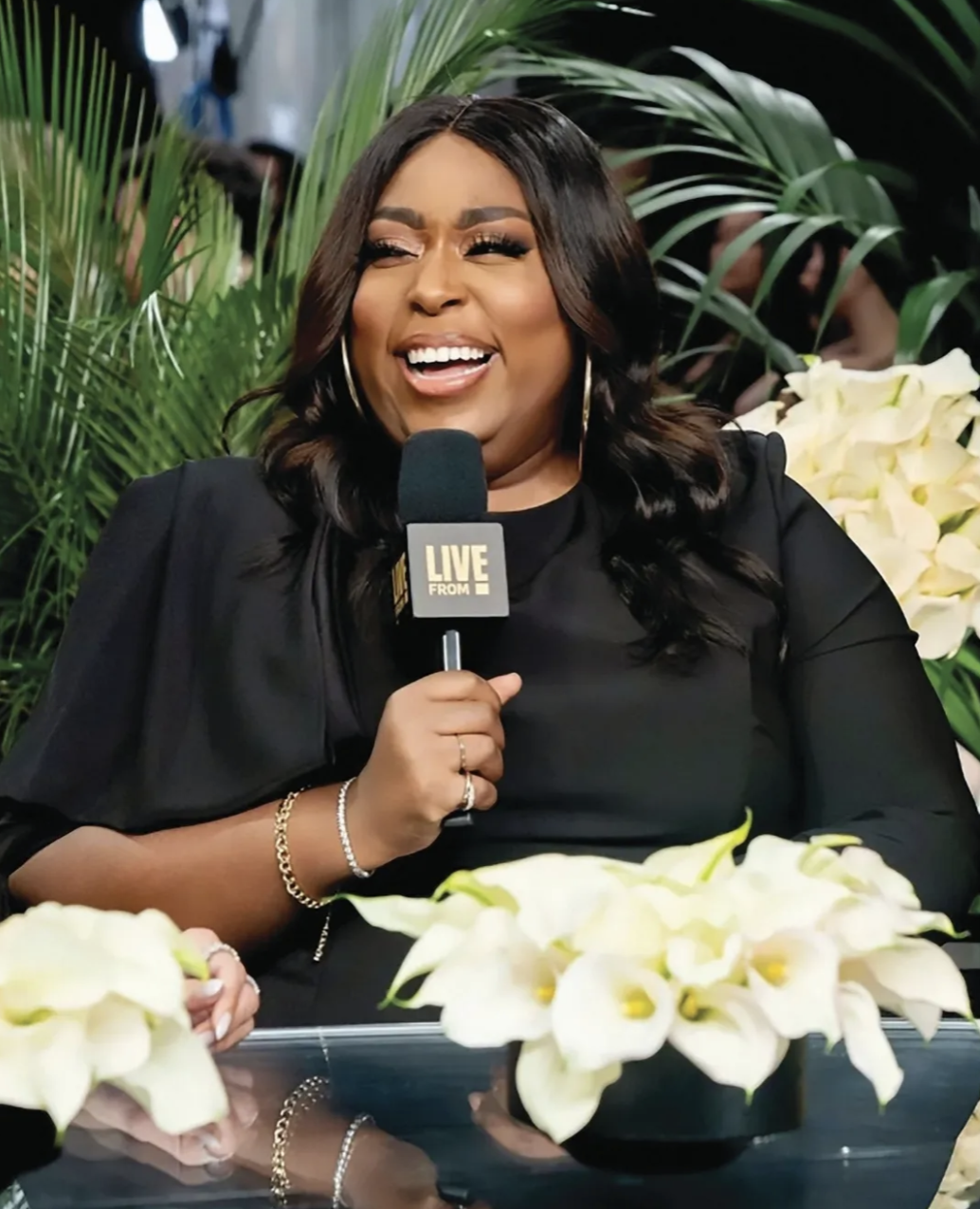
It wasn’t a lesson she learned overnight, just like her path to the stage wasn’t a quick one. She went from 12-hour days on the assembly line at General Motors, to grinding her way through an electrical engineering degree after a manager at the plant encouraged her to apply for college (and scholarships), landing an engineering job at Xerox in California where she worked during the day while hustling in the LA comedy scene at night, getting a development deal from HBO, and worrying about the security of keeping good dental benefits — the metric she’d always considered proof that she’d made it out of poverty. When a mass layoff hit the company, Love’s job wasn’t in danger, but, she tells Celebrate Arkansas, she took the situation as a sign. “It was hard for me to give it up, but I went to my boss and said, ‘I think this is my sign to leave and just pursue comedy full time.’ It was never a hobby; it was just something that I was doing at night because I felt like it was fulfilling, but I always knew I was eventually going to try to pursue it full time,” she says looking back.
Love describes the career switch simply, without drama, which is exactly how she approaches her work: practical, funny, and bluntly honest. “Actually, I kind of equate engineering and comedy as somewhat the same,” she admits. “We are basically there to solve problems. With comedy, you’re actually solving a problem as well; you’re trying to make something funny. In a way, you’re using the same skills, it’s just a different type of subject matter.” Love’s career has allowed her to travel the world bringing laughter to audiences while also supporting causes she believes in. One such opportunity brings her to Northwest Arkansas this month, when she will headline the Mercy O’ Night Divine Gala in Rogers, a black-tie evening where laughter and philanthropy will meet.
It’s the kind of gig that reminds Loni she chose the right path; she gets to explore somewhere different to use her talent for making people laugh at an event glamorous enough for a wig debate (during our early-October phone call, she reveals she’s already trying to decide on the right one), yet meaningful enough to call for a mic in service of something larger. “I can’t wait,” she says, almost bursting with the kind of giddy rush only a performer can love. “I’m trying to decide what wig I’m going to wear, what outfit; that’s the biggest issue. I don’t have an issue with the great people of Arkansas — I know y’all are some good laughers and I think this is just a great cause, and we’re going to raise some money … but I gotta decide which wig I’m going to wear!”
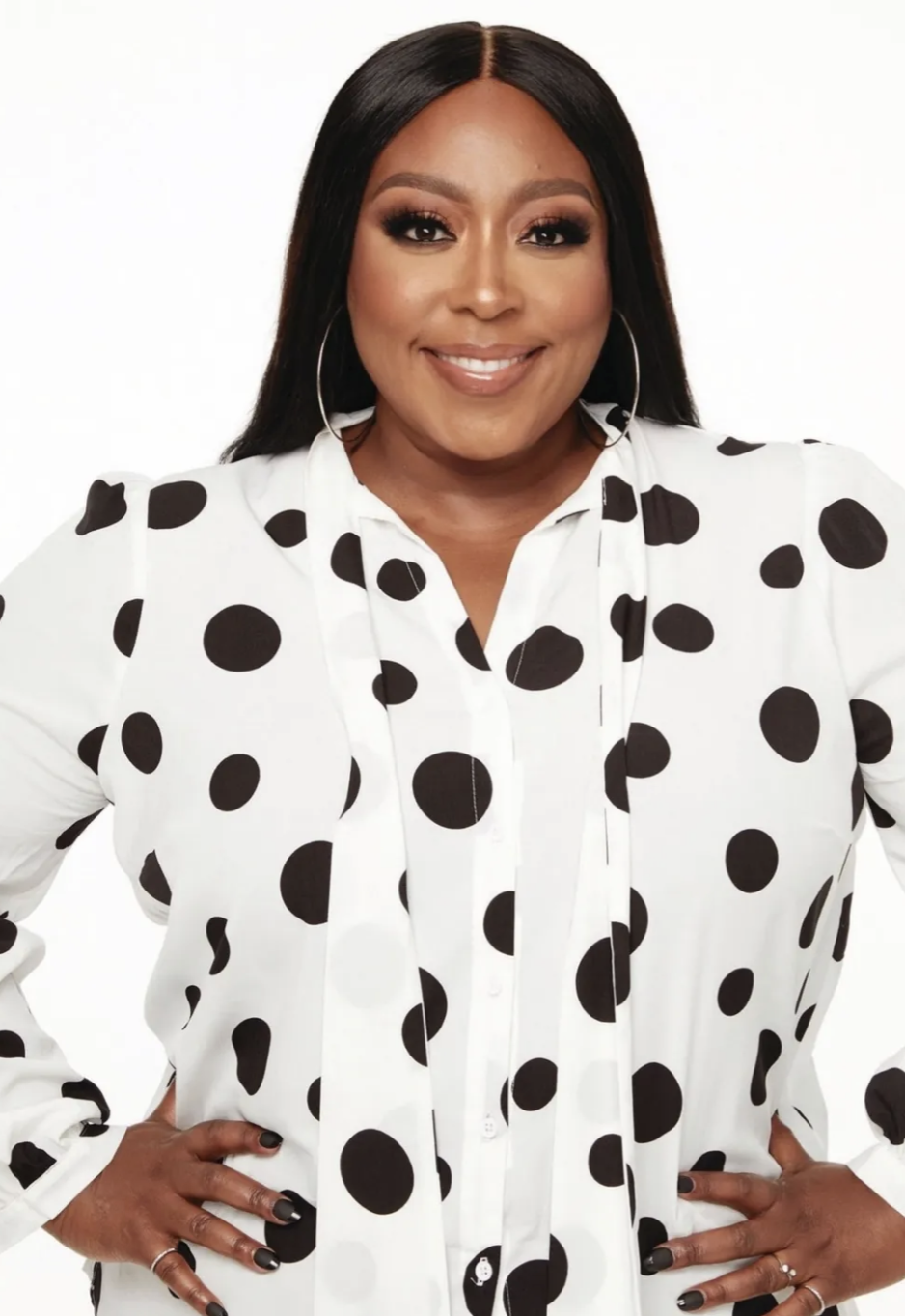
The gala’s — and its entertainer’s — task is straightforward: create an irresistible night and turn it into tangible improvements for the community. For more than three decades, O’ Night Divine has established a legacy of following through on that charge. Last year’s fundraising helped pay for a new Interventional Radiology suite. In the 2025 fiscal year, Mercy Health Foundation Northwest Arkansas raised more than $4.4 million and allocated nearly $6.9 million total to community programs. Those numbers translate into new services, expanded care, and real outcomes for local families. Mercy’s work of growth and partnership celebrated 75 years in the region this September and relies heavily on nights like this where generosity and joy intersect.
Don’t worry; Loni’s all over it.
“I want people to have fun! I want people to feel good about the fact that they’re raising funds for a wonderful organization. That’s the job.”
That’s that job. One of about 73 Love has on her plate at any given moment. Loni’s December 6 Rogers visit is the final stop on her Time to Laugh tour and wraps up a month of appearances “volunteering, inspiring, informing, fundraising, and entertaining” she says in the Instagram caption with her November schedule. The dates included hosting gigs supporting the Children’s Institute, the FIERCE 100 Women’s conference, the HBCU First Look Film Festival, the Not Alone Awards, Project Angel Food, and finally Mercy Health Foundation. Love also just celebrated the 15th anniversary of the Gracie Award-winning weekend radio show she co-hosts, Café Mocha, which is the only nationally syndicated show of its kind, created by women of color and broadcast on more than 45 stations.
The two-time Emmy, two-time NAACP Image, and three-time Gracie Award-winning radio, TV, and podcast host, comedian, actor, author, and philanthropist has built a career that never stays in one lane for long. Early TV moments — Star Search, Hollywood Squares, Chelsea Lately — put Love in front of national audiences. Then, millions got to know her through eight seasons of The Real, the groundbreaking daytime talk show she co-hosted on one of the first daytime panels comprising solely women of color. With its honest conversations about culture, relationships, body image, and life as modern women, the show carved out a space that felt refreshingly real — unfiltered, funny, and inclusive in ways daytime TV hadn’t seen before. Whether on radio, television, or the various podcasts she has hosted, Love has a long-established reputation for leading compassionate and nuanced conversations with her interview subjects, including former President Obama, former Vice President Kamala Harris, John Legend, Tyler Perry, and countless others.
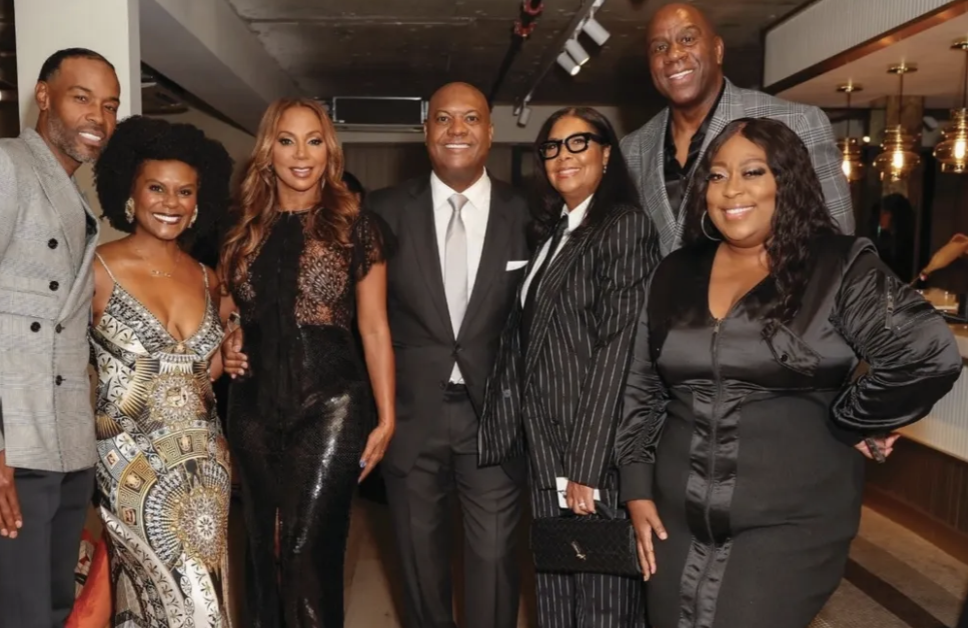
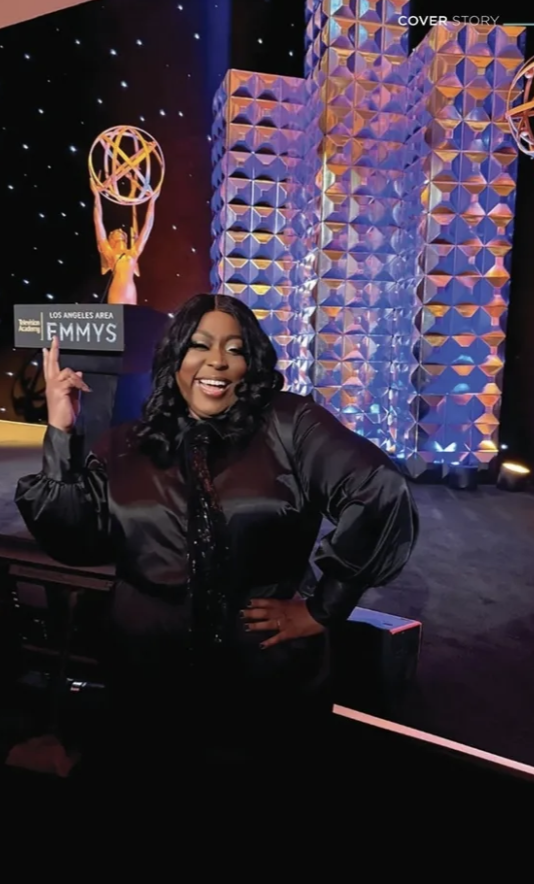
Her social channels further reflect that authenticity. She promotes shows and events, sure, but she also uses the feed to share moments of joy and curated posts that highlight issues she cares about to inform her followers. “You would be surprised how many people come up to me and say, ‘I love your Instagram, I love your TikTok because it informs me!’ Some people don’t know what’s happening in the world,” she says with a disbelieving laugh. “So, if I become that vehicle, my followers have a place where they can have discussions about it.” A comic’s megaphone becomes, in her hands, a civic tool.
Building connection through laughs has always been Love’s tool of choice, but it’s also a bridge to deeper exchanges. By refusing to shrink her voice, her vulnerabilities, or herself, Loni gives other women permission to stop hiding those parts, too — particularly women navigating the complexities of life beyond 50. She is intentional in using her platform to highlight experience and wisdom, celebrating voices often overlooked while reminding listeners that life doesn’t slow down with age. “No one told me that once I hit 50, I would get more experience … but also that I would lose half my organs,” she quips. “But still, I’m living. So, I think that that’s important.”
Mercy’s presence in Northwest Arkansas is itself the product of a long civic conversation. Thanks to the community’s drive to keep quality health care close to home, the modest 30-bed Rogers Memorial Hospital that opened in 1950 has grown into a 263-bed medical center and regional system serving hundreds of thousands each year. Continued investment and collaboration — including a new partnership with the Alice L. Walton Foundation and Heartland Whole Health Institute — are shaping the next chapter, expanding access to care and strengthening the region’s health landscape.
It’s not lost on Loni that her work — bringing people together, reminding them to see each other — isn’t so different from Mercy’s. Both are built on service and empathy, just expressed in different forms. “Ever since the beginning of my career, I made a — if you want to call it a mantra, basically — that I will use my platform to entertain, inform, or inspire. And that’s what I use my platform for. I think a lot of comedians get caught up with looking at the moment instead of what it is they actually stand for.” That sense of purpose, she says, has only deepened with time. “I want to try to do the right thing. And, for me, the right thing is being tolerant of people, understanding people, listening to each other. I think we all need each other. So, what I try to do is to remind people that we all depend on each other. That we all need each other. And that we should all be kind to each
This digital version of the cover story is provided courtesy of Celebrate Arkansas Magazine for free online viewing. Enjoy our in-depth features and insights, brought to you digitally while preserving the quality and integrity of our print publication.
Like what you’ve read?
View a full digital copy of this issue for free now. Enjoy stories like this and so much more in each copy of Celebrate Arkansas.